Hey there! Let’s cut to the chase—if you’ve ever waited at a train station, dragging a suitcase, or struggled to climb a flight of stairs with a stroller, you know just how critical elevators are for getting people where they need to go. But here’s the question I get all the time from station managers, architects, and even fellow elevator folks: can machine room less elevators (MRLs) work in busy train stations? As a supplier of MRLs, I’m here to break this down without the corporate jargon, because let’s be real, no one wants to read a 10-page technical manual about it. Machine Room Less Elevators
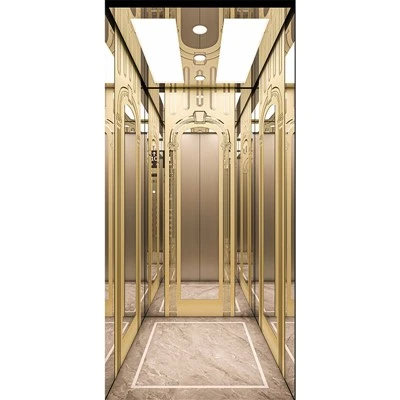
First, let’s get the basics out of the way. What’s an MRL, anyway? Unlike traditional elevators that have that big, noisy room on the roof stuffed with a traction machine, gearbox, and all that extra stuff, MRLs tuck the motor right into the hoistway (the shaft where the elevator car moves). That means no massive rooftop room, way less noise, and they’re smaller, lighter, and way more energy-efficient. But does that fit a train station? Spoiler: for most modern train stations, yeah, it does—when you pick the right model and size.
Let’s talk about train station pain points, because that’s where MRLs shine. Train stations are chaotic, high-traffic places. You’ve got rush hour cramming hundreds of people into narrow corridors, plus frequent power dips, dust, humidity, and even occasional debris from luggage or fallen railings. Traditional elevators? They often need that rooftop machine room, but train stations rarely have extra space on the roof—most old stations were built before elevators were even a second thought, and new high-speed rail stations are designed to maximize every inch for ticket counters and waiting areas. MRLs skip the roof room, so you don’t have to carve out space that could be used for a new food cart or extra seating. That’s a win right there.
Noise is another big one. Imagine you’re on a train platform, trying to hear the next announcement over the roar of trains and crowd chatter. A traditional elevator’s rooftop machine room would hum so loud, it would mess with announcements and make waiting there way more stressful. MRLs run quiet—like, almost too quiet. I’ve installed models in train stations where people didn’t even realize an elevator was running next to them until they saw the car move. That’s not just a nice perk; it’s a requirement for most modern transit designs, because stations have strict noise limits to keep passengers comfortable.
Now, let’s address the “can they handle the traffic?” question, because train stations aren’t office buildings with 9-to-5 crowds. A major city train station might have 10,000 passengers an hour during rush hour. Can MRLs keep up? The short answer: yes—if you spec them right. The key here is choosing MRLs with the right load capacity and a robust motor. A lot of people think MRLs are only for small residential elevators, but that’s a myth. We sell heavy-duty MRL models rated for 5,000 pounds or more, perfect for carrying groups of people plus luggage, wheelchairs, and even bike racks. We also build in extra durability: sealed motors to keep out dust and humidity, reinforced door systems that can handle people leaning on them (which happens a lot in busy stations), and redundant safety features so if one part trips, another kicks in immediately.
Wait, what about reliability? Train stations can’t afford elevators breaking down. If an elevator goes out during rush hour, that’s a nightmare—passengers miss trains, staff have to redirect crowds, and no one’s happy. MRLs used to have a reputation for being finicky, but that was back in the early 2000s when the tech was new. Today’s MRLs use permanent magnet synchronous motors (PMSMs) instead of old induction motors, which are way more reliable, have fewer moving parts, and need way less maintenance. We do monthly check-ins for all our station installs, and I can tell you—our MRLs have way fewer emergency calls than the traditional elevators we serviced in stations 10 years ago. Plus, since there’s no big rooftop machine room, there’s less space for dust and grime to build up on the machine, which means fewer breakdowns.
But let’s be honest, MRLs aren’t for every train station. Old, narrow tunnels for elevators—like in historic train stations that were built in the 1920s with super small hoistways—might not fit MRLs. Wait, no, actually, we’ve retrofitted some of those. We make compact MRL motors that can fit into hoistways that used to be too tight for traditional machines. It just requires a custom fit, not a one-size-fits-all. Another exception: some stations with extremely heavy passenger loads, like major intercity hubs that need elevators rated for 10,000 pounds or more. While we do make those, sometimes a traditional traction elevator with a machine room is still more cost-effective for those super heavy-duty uses. But for 90% of train stations, from local commuter stops to mid-sized high-speed rail hubs, MRLs work perfectly.
Another big plus: energy costs. Train stations run 24/7, 365 days a year. Traditional elevators use a ton of power, especially the big motors in the rooftop rooms, because they have to work hard to move the heavy gearbox. MRLs? Their PMSM motors are 30-50% more energy-efficient, according to industry tests. That adds up over a year—we’ve had station managers tell us their elevator energy bills dropped by almost $2,000 a year after switching to MRLs. For a station that’s already watching overhead costs, that’s a huge win.
Now, let’s talk about installation. Train stations can’t shut down for a week to install elevators—they’ve got trains running every few minutes, crowds waiting to get on and off. Traditional elevator installs take forever, because you have to lift the big rooftop machine up (sometimes with a crane, which blocks the platform for hours) and mount it. MRLs are smaller, so we can move the parts in through the hoistway or even the main entrance, without cranes blocking platforms. We can install an MRL in half the time of a traditional elevator, which means less downtime for the station and fewer headaches for passengers. That’s something every transit manager cares about, trust me.
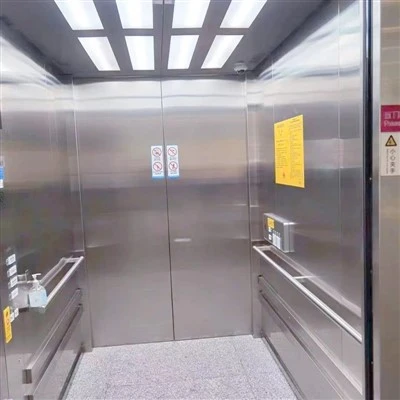
Wait, what about accessibility? Train stations are required to be ADA-compliant (or whatever your local accessibility standard is) in most places, right? MRLs can be built with all the accessibility features you need: wide doors for wheelchairs and strollers, voice announcements, braille buttons, and even space for luggage carts. Some people worry that smaller MRLs mean smaller cars, but no—we design the car interiors to be as spacious as traditional elevators, so there’s no trade-off in accessibility. In fact, the compact motor means we have more space inside the car for passengers and equipment.
Let me share a real example, because that’s what matters. Last year, we installed 12 MRLs at a mid-sized commuter train station in Portland, that was being renovated to handle 20% more passengers. The old station had traditional elevators that kept breaking, and the rooftop machine room was leaking, causing water damage. We swapped them out for heavy-duty MRLs. Six months later, the station manager told me their elevator emergency calls were down 75%, their energy bills were way lower, and even passengers commented on how quiet and smooth the elevators were. They didn’t have to build a new rooftop machine room, so they added a small outdoor seating area there instead, which boosted revenue from the coffee shop right next to it. That’s the kind of win we’re all about.
But let’s not ignore the downsides, because no product is perfect. MRLs do require more precise installation—if you cut a corner on mounting the motor, it can cause more wear and tear over time. That’s why we only work with certified installers who know MRLs inside out, no random contractors. Also, some older technicians might not be familiar with MRL tech, so we offer free training for station maintenance teams to make sure they know how to fix issues quickly if they come up. We also have a 24/7 support line, so if an elevator does have a problem, our team gets there faster than anyone else.
So, the final answer to the question: can machine room less elevators be used in train stations? Yes—for almost every modern train station, and even most older ones that need a retrofit. They save space, are quieter, more energy-efficient, more reliable, and quicker to install than traditional elevators. The only time they might not be the best fit is for extremely heavy-duty, super high-capacity hubs where traditional elevators are still the better option, or if your hoistway is way too small for even compact MRLs (which is super rare these days, since we design for tight spaces).
Now, if you’re a station manager, architect, or transit official who’s looking to upgrade or install new elevators in a train station, this is the time to reach out. We don’t do generic sales pitches—we’ll come look at your station, measure your hoistways, talk through your passenger load, and give you a custom quote that fits your budget. No hidden fees, no complicated contracts, just straight talk about what will work best for your passengers and your station. Don’t let outdated elevator tech hold your transit center back—MRLs are the future, and they’re already working in train stations across the country.
If you’re ready to chat more, just get in touch. We’re here to help you make your station more accessible, efficient, and reliable for everyone who passes through.
Passenger Elevators References
- Elevator World. (2022). Machine-Room-Less Elevators: Modern Applications and Performance Metrics.
- American Public Transportation Association. (2021). Accessibility Guidelines for Transit Facilities, Volume 2.
- International Code Council. (2020). National Elevator and Escalator Safety Code.
- U.S. Department of Energy. (2022). Energy Efficiency Benchmarks for Commercial Elevator Systems.
- National Elevator Industry Educational Program. (2023). Maintenance Best Practices for Machine-Room-Less Elevators in High-Traffic Environments.
Ningbo Dongao Elevator Co., Ltd.
As one of the most experienced machine room less elevators manufacturers and suppliers in China, we also support customized service. We warmly welcome you to buy high quality machine room less elevators for sale here from our factory. For quotation, contact us now.
Address: No. 16 Xiapan Road, Ninghai County, Ningbo City, Zhejiang Province
E-mail: 13777289058@163.com
WebSite: https://www.daelevator.com/
