If you’ve ever held a plastic toothbrush, a pack of small toy cars, or a dozen disposable lighters in one hand, you’ve held products made with a multi-cavity mold—one of the most game-changing innovations in plastic injection moulding, and a tool that’s right at the core of what we do as a plastic injection moulding machine supplier. For anyone new to manufacturing, it’s easy to mix up mould types, but multi-cavity designs aren’t just a “bigger” version of a single-cavity mould. They’re a precision-engineered system that turns one injection shot into dozens of parts, and mastering them is how brands go from small prototype runs to mass production without sacrificing quality. Plastic Injection Moulding Machine
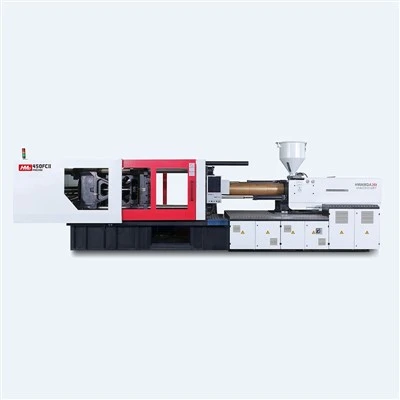
Let’s start with the basics: when you run an injection moulding machine, you heat plastic resin until it’s molten, then inject it under high pressure into a mould cavity, where it cools and hardens into your finished part. A single-cavity mould has one cavity, so every cycle produces one part. A multi-cavity mould has two or more identical cavities (usually dozens, depending on part size) arranged in a single mould base. At first glance, it sounds simple, but the engineering behind these moulds is what makes them work—especially when you’re looking to scale production efficiently.
Why does this matter so much? Let’s do a quick math check. Suppose a part takes 10 seconds to mould, and your machine can run 24 hours a day. With a single-cavity mould, that’s 8,640 parts a day. With a 16-cavity mould (a common size for small parts like bottle caps or electronic connectors), that’s 138,240 parts a day from the same exact same cycle time and machine. That’s a massive difference in output—no extra machine, no extra labour, just a mould designed to split the molten resin evenly across all cavities. For a consumer brand needing millions of parts a month, that’s the difference between a profitable launch and a missed market window.
But it’s not just about quantity. The best multi-cavity moulds are also built to cut down on waste. Single-cavity moulds produce 100% more runner material—the excess plastic that flows from the machine’s nozzle to the cavity gate—than a multi-cavity mould designed for balanced flow. Wait, what’s balanced flow? That’s a make-or-break detail for multi-cavity moulds. If even one cavity is off, you get parts that are underfilled, warped, or have inconsistent thickness. A 32-cavity mould for, say, a disposable razor head relies on every cavity receiving the same amount of resin at the same pressure. Mould designers use flow analysis software to map the runner system, making sure the path from nozzle to each cavity is identical length and diameter, so no one cavity gets more resin than another. If you skip that step, you’ll end up with a batch of bad parts, wasted resin, and a machine cycle that’s essentially throwing money down the drain.
As a supplier of injection moulding machines, I work with mould makers every day, and the biggest mistake I see new manufacturers make is assuming all multi-cavity moulds are created equal. A mould for small, simple parts—like a 24-cavity mould for pill blister packs—uses a standard steel mould base, with cores and cavities machined to tight tolerances (usually within 0.001mm, to ensure consistent part size). But for larger parts, like plastic automotive interior trim panels, multi-cavity designs are rarer (since the part itself is big) and often use custom inserts to cut down on material and cycle time. Even so, the core principle stays the same: every cavity has to operate the same way.
Another key point is part uniformity. When you’re making parts for assembly lines, even a 0.5mm difference in size can cause a whole product to fail. Multi-cavity moulds eliminate that risk because all parts are made in the same shot, under the same pressure, at the same temperature. I recently worked with a medical device client that needed 5 million small plastic vial caps for a new vaccine packaging line. They tried a single-cavity mould first, but their machine ran 20 hours a day and still couldn’t hit their output target. Swapping to a 48-cavity multi-cavity mould cut their cycle time per 100 parts by 60%, and every cap came out within ±0.1mm of the required diameter. That’s the power of the right mould paired with the right machine.
But here’s where it gets tricky: multi-cavity moulds aren’t right for every job. If you’re making a large, custom part—like a plastic garden chair or a large appliance housing—a multi-cavity mould is impractical, because the cavities would be too big, and you’d end up with uneven cooling. Cooling is another critical factor. Each cavity needs to cool at the same rate; if one cavity’s cooling line is blocked, that part will warp when it’s ejected. Good mould designers add individual cooling channels for each cavity, or use conformal cooling (channels shaped to fit the cavity’s contours) to speed up cooling time. For high-volume runs, that extra engineering is worth it—faster cooling means faster cycle times, which means more parts per hour.
As an injection moulding machine supplier, we also adjust our machine recommendations based on multi-cavity moulds. A 16-cavity mould needs a machine with consistent pressure control, because even a 5psi difference between shots can lead to uneven part quality. Older machines might fluctuate in pressure, leading to a mix of good and bad parts, but modern machines with closed-loop injection control eliminate that problem. We also size the machine’s shot capacity correctly: if a mould needs 100 grams of resin per cycle, the machine’s shot capacity has to be able to handle that, with a small buffer to avoid waste. Too small a machine, and it can’t inject enough resin to fill all cavities; too big, and you’re wasting energy on excess heat and pressure.
Another common myth: multi-cavity moulds are only for high-volume runs. While they do shine for 100,000+ part orders, they can also be used for small runs. If you’re making a prototype batch of 500 custom phone cases, a 4-cavity multi-cavity mould will let you test 4 designs in one cycle, cutting down on prototype time. It’s not just for mass production—it’s a flexible tool for reducing time-to-market at every stage of manufacturing.
Waste reduction is another big win for brands focused on sustainability. The runner material from injection moulding is usually recyclable, but it still takes time and energy to reprocess. Multi-cavity moulds cut down on runner length by 70% in most cases, which means less scrap and a lower carbon footprint per part. For brands that have set net-zero targets, that’s a tangible benefit that goes straight to their bottom line and their ESG reports.
But there are hidden costs, too. Multi-cavity moulds are more expensive upfront than single-cavity ones—machining dozens of identical cavities to tight tolerances takes more time and precision. So you have to calculate the break-even point: how many parts do you need to sell to cover the extra mould cost, minus the savings from lower cycle times and higher output. For small runs, that might not make sense, but for runs over 50,000 parts, it’s almost always a no-brainer. As a supplier, we help clients run that calculation every day—we don’t just sell machines, we help them pick the right mould setup for their specific volume and part needs.
I recently worked with a toy manufacturer that was making a line of small action figure accessories. They started with 8-cavity moulds, but as demand grew, they upgraded to 24-cavity moulds. They were worried about initial cost, but within three months, the increased output had paid for the mould upgrade, and their per-part cost dropped by 45%. That’s the kind of return on investment that makes multi-cavity moulds worth the upfront spend.
Another thing to consider: mould maintenance. Multi-cavity moulds have more moving parts (or more cavities, which are exposed to more wear from resin and ejection) so they need regular upkeep. We recommend clients schedule monthly inspections of their moulds, checking for worn ejector pins, blocked cooling lines, and uneven cavity wear. A small blockage in one cooling line can cause that cavity to produce warped parts, so catching it early saves a lot of wasted material and downtime.
So, putting it all together: a multi-cavity mould is a precision-engineered tool that turns one injection moulding cycle into multiple identical parts, designed to maximise output, reduce waste, and ensure uniformity—when paired with the right machine and design. It’s not a one-size-fits-all solution, but for most high-volume plastic products, it’s the most efficient way to manufacture.
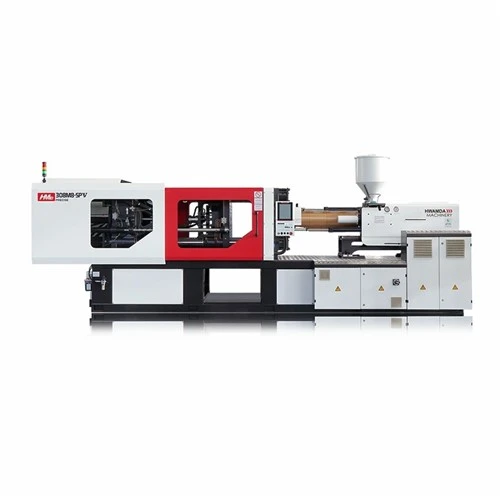
If you’re ready to explore how a multi-cavity mould could work for your production, or you need the right injection moulding machine to pair with your mould, reach out to our team to connect on your project. We work with mould makers, product designers, and manufacturers of all sizes to build setups that fit your volume, part specs, and budget.
Plastic Injection Moulding Machine References
- Rosato, D. V., & Rosato, M. G. (2000). Injection Molding Handbook (3rd ed.). Kluwer Academic Publishers.
- Kazmer, D. O. (2007). Injection Mold Design Engineering. Hanser Publishers.
- Boothroyd, G., & Dewhurst, P. (1983). Product Design for Manufacture and Assembly. Marcel Dekker.
- International Organization for Standardization. (2018). Plastics Injection Molding Machines – Safety Requirements (ISO 13849-1:2017). ISO.
- Owen, M. (2015). Sustainable Injection Molding: Reducing Waste and Improving Efficiency. Hanser Publications.
Hwamda Machinery Manufacturing Company Limited
As one of the most professional plastic injection moulding machine manufacturers and suppliers in China, we also support custom service. Please feel free to wholesale cheap plastic injection moulding machine from our factory. Quality products and reasonable price are available.
Address: 368 Anju Road, Xiaogang, Ningbo, Zhejiang Province
E-mail: hwamdamachinery@vip.163.com
WebSite: https://www.hwamda-manufacturing.com/
