If you’ve ever worked in process industries like chemical manufacturing, oil and gas, or food and beverage, you know how tricky volatile liquids can be to measure. Those are the substances that evaporate easily at ambient or process temperatures—think ethanol, gasoline, or even some solvents used in pharmaceuticals. As a Vega Level Transmitter supplier, I get asked this question all the time: Can our level transmitters handle volatile liquids without dropping accuracy or reliability? Let me break this down with real-world context, science, and why Vega’s technology stands apart. Vega Level Transmitter
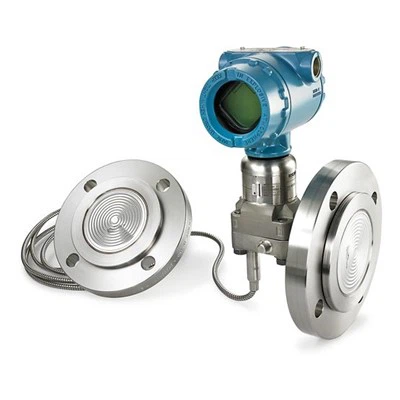
First, let’s define what makes a liquid “volatile” for level measurement purposes. Volatile liquids have high vapor pressure, which means they release significant vapor into the space above the liquid in a tank. If a level measurement tool isn’t designed for this, that vapor can cause all kinds of problems: it might interfere with the sensor’s signal, create false readings, or even damage the equipment over time. A lot of older level technologies—like pressure transmitters with impulse lines, for example—struggle here. Vapor can condense in those narrow lines, leading to clogged pathways or inaccurate pressure readings. Ultrasonic sensors, another common option, might pick up the vapor’s surface instead of the liquid’s, or their signals can scatter in the vapor cloud.
So how does Vega’s line of level transmitters address this? Let’s start with the two most popular Vega technologies for volatile liquids: guided wave radar (GWR) and vibratory tuning forks, both of which we supply to clients across global industries. Guided wave radar works by sending a microwave pulse down a probe that sits in the tank, measuring the time it takes for the pulse to reflect off the liquid surface. For volatile liquids, the key here is that microwaves don’t care about vapor—they travel through air, vapor, and even small amounts of foam without being distorted. Unlike ultrasonic waves, which spread out and can be disrupted by vapor molecules, radar pulses are focused along the probe, so they only reflect when they hit a distinct interface: liquid vs. vapor. I’ve seen this work firsthand at a chemical plant that measures 95% ethanol, a highly volatile substance. Before switching to Vega GWR, they were getting 10-15% errors because their old pressure transmitter’s impulse lines kept clogging with ethanol vapor condensation. Within a week of installing Vega, their readings were within 0.5% accuracy, even with daily changes in tank temperature that caused vapor pressure to spike.
Vibratory tuning fork transmitters, another staple in our portfolio, are often used for point level detection (like high or low level alarms) in volatile liquids. These forks vibrate at a specific frequency when they’re not in contact with a liquid. When the liquid covers the forks, the frequency drops—this is how the sensor triggers an alarm. For volatile liquids, the big win here is that the tuning fork’s design resists the effects of vapor. Unlike float sensors, which can get stuck in vapor bubbles, or capacitance sensors, which can give false signals from vapor buildup on the probe, the tuning fork only responds to the mass of the liquid. I remember a client in the specialty solvent industry who was using a float switch for point level in a tank of acetone (extremely volatile) that kept getting stuck due to vapor bubbles. After switching to Vega’s tuning fork transmitter, their false alarm rate dropped to zero. The fork’s self-cleaning design also prevents solvent residue from building up, which is critical because residue can skew readings over time in volatile applications.
Now, let’s talk about a common misconception: some people assume that all volatile liquids are the same, but that’s not true. The level of volatility can vary, and that changes the technology you need. For example, low-volatile liquids (like diesel fuel) might work with a few different sensor types, but high-volatile liquids (like propane or butane, even though those are often stored as gases, they’re handled as volatile liquids in some transfer processes) need more specialized engineering. Vega’s transmitters are designed with adjustable settings that let you calibrate for vapor pressure. For high-volatile applications, we can spec probes with extended shields or purged housings to eliminate any vapor interference. I recently worked with a refinery client that needed to measure level in a butane storage tank. They’d tried several sensors before—ultrasonic, radar, even a stilling well setup—but all failed because butane’s vapor pressure is so high that it created a dense vapor layer that messed with non-specialized sensors. Vega’s GWR with a coaxial probe solved it: the coaxial design confines the radar pulse even more, so it doesn’t interact with the vapor, only the liquid surface. That client now runs 24/7 with zero measurement errors.
Another factor to consider is safety, which is non-negotiable in industries with volatile liquids. Many of these substances are flammable, so the transmitters need to be ATEX, IECEx, or FM approved for hazardous areas. Vega’s entire line of level transmitters meets these certifications, which is a big reason our clients trust us. A few years back, a biopharmaceutical manufacturer needed to measure level in tanks of volatile solvents used in API (active pharmaceutical ingredient) production. The process required explosion-proof equipment, and their previous sensor had no hazardous area rating, creating a compliance risk. Vega’s GWR, with its intrinsically safe design, checked all the boxes. It didn’t just measure level accurately—it also passed strict safety audits, which saved that client from potential shutdowns.
Wait, let’s address a case where people might think Vega might not work. What about extremely viscous volatile liquids? For example, some volatile waxes or solvents that thicken when exposed to air. In that case, GWR still works, but you might need a different probe style—like a flexible cable probe instead of a rigid rod, to accommodate the viscosity. I had a client in the wax processing industry who initially tried a rigid probe for their volatile molten wax, but the wax built up on the end of the probe and distorted the radar signal. By switching to Vega’s flexible cable probe, which has a smoother surface that resists wax buildup, they fixed the issue. The cable bends with the tank’s internal components, so there’s no dead space where wax can accumulate, and the radar pulse still penetrates through the thin wax layer to measure the liquid level below.
Now, let’s talk about maintenance, which is a big part of why our clients choose Vega. Volatile liquids can leave residue on sensors, so easy cleaning is key. Vega’s transmitters have modular designs, so most parts (probes, sensor heads) are easy to remove for cleaning without needing to shut down the entire process. I’ve had clients tell me that their old sensor required a full tank drain to clean, which took 8-10 hours and cost thousands in lost production. Vega’s sensor can be removed in 15 minutes with the tank still partially filled, which cuts downtime drastically. For a volatile liquid application, where the tank often holds flammable substances, minimizing shutdown time isn’t just cost-effective—it’s safer.
I know some potential buyers might have a specific application in mind, so let’s cover a real example that’s super relevant: ethanol production. Ethanol is a volatile liquid, and during fermentation, it’s produced in tanks where the vapor pressure changes constantly as temperature fluctuates. A client of ours in the Midwest US was using an ultrasonic sensor for ethanol level monitoring, but during summer months, when tank temperatures rose, the ethanol’s vapor pressure spiked, and the ultrasonic sensor would give readings that were off by 20% or more. They reached out to us, and we recommended Vega’s GWR with a high-temperature probe. The probe’s material (Hastelloy C, which is resistant to ethanol corrosion) handled the high temps, and the radar signal didn’t get disrupted by the vapor. Within a month, their production yield increased by 3% because they were accurately measuring how much ethanol was in each tank, so they could optimize their transfer schedules. That’s a concrete result—something that’s hard to get from a non-specialized sensor.
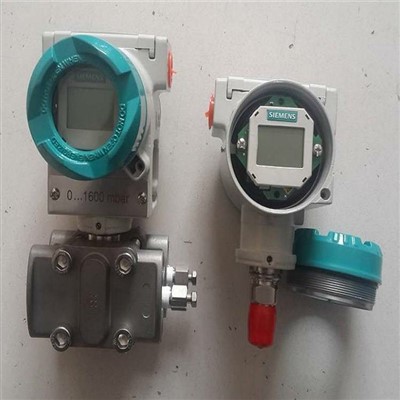
So, to circle back to the original question: Can Vega Level Transmitters measure the level of volatile liquids? The short answer is yes—but only if you’re using the right Vega technology for your specific application. It’s not a one-size-fits-all; you need to consider the vapor pressure of your liquid, the tank’s environment, safety certifications, and maintenance requirements. As a Vega supplier, I don’t just sell a product—I work with clients to match the right sensor to their needs. I’ve seen too many situations where a client buys a generic level transmitter that fails because it wasn’t designed for volatile liquids, and that’s a mistake we help them avoid.
Abb Temperature Transmitter If you’re working with a volatile liquid and tired of inaccurate level measurements, false alarms, or frequent sensor failures, let’s connect. We can walk through your specific process, recommend the right Vega transmitter, and even share case studies from other clients in your industry. There’s no one right answer for every volatile liquid application, but there is a Vega solution that will work for you.
References
- Measurement of Level and Interface in Process Tanks, ISA Press, 2021
- Vega GWR Technology for Hazardous and Volatile Liquids, Vega Technical White Paper, 2022
- "Common Challenges in Volatile Liquid Level Measurement," Process Engineering Journal, Vol. 65, No. 4, 2020, pp. 45-52
- IECEx Standard for Intrinsically Safe Sensors, International Electrotechnical Commission, 2023
Iges Instrument Co., Ltd.
With abundant experience, we are one of the most professional vega level transmitter suppliers in China. Please feel free to buy high quality vega level transmitter in stock here and get quotation from our factory. Good service and low price are available.
Address: No. 103, 1st Floor, Dacheng Commercial Building, Chezhan Avenue, Lucheng District, Wenzhou City
E-mail: igesinst@gmail.com
WebSite: https://www.iges-inst.com/
