If you’ve ever stood in front of a hydraulic forging press, you might’ve noticed the little box tucked to the side, or maybe the handheld unit an operator fidgets with before every strike. A lot of first-time buyers and even some small forging shop owners ask me, “What is that remote control for, anyway, and do I really need it?” As a supplier who’s been around presses long enough to fix more than I can count, I’m here to break this down like I would to a new customer who’s just checking out their first piece of forging gear. Hydraulic Forging Press
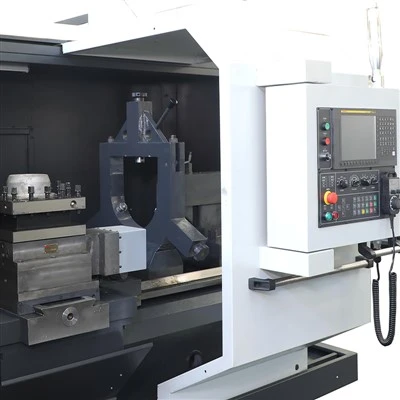
First, let’s get the basics straight: a hydraulic forging press isn’t like a old-school mechanical press with big gears and a flywheel. It uses pressurized hydraulic fluid to generate force—tons of it, depending on the model. The remote control is the bridge between what the operator wants the press to do and the massive cylinders, valves, and pumps that make that happen. It’s not some fancy gimmick; it’s the control center that keeps the press safe, accurate, and consistent, and that’s non-negotiable when you’re forging anything from car parts to construction equipment.
Let’s start with the day-to-day stuff you’ll actually use it for. When an operator is forging a piece, they don’t stand right next to the moving ram (that’s the part that presses down on the metal). The remote lets them position themselves a safe distance away, so if something goes wrong—like a small piece of metal flying off, or a seal leaking—they’re not in the line of fire. That’s a big one for safety: OSHA standards (and any other workplace safety rules) require operators to have clear visibility and distance from the press’s active area, and remotes make that easy. No more leaning over the press frame to adjust a part mid-strike.
Then there’s precision. Hydraulic presses are all about control over force and speed, and the remote is how you dial that in. A lot of people think “forging” just means a big hard hit, but most modern forging jobs need multiple smaller strikes, or even slow, steady pressure to shape a complex part. The remote lets you adjust things in real time: you can set the ram to move 10 millimeters at a time, apply 50 tons of force for a rough strike, or slow the ram down to 100 mm per second for a finish pass. Without that kind of fine control, you’ll end up with parts that are either too warped, too soft, or not to spec. I’ve seen new shops skip the remote and try to rig up their own foot pedals, and it never works—you can’t replicate the consistent timing and force that a purpose-built remote gives you.
Wait, but not all remotes are the same, right? Yeah, that’s another thing I explain to customers. There are two main types you’ll see on hydraulic forging presses: handheld wired remotes and wireless (Bluetooth or radio frequency) ones. Wired is more common on mid-sized presses, because there’s no risk of signal dropping mid-strike—super important if you’re doing a repetitive job like forging axles, where a missed strike means reworking the whole part. Wireless is popular for larger presses, especially those with long frames where the operator needs to move around the press to adjust dies or check the part between strikes. No trailing cable to trip over, and most modern wireless remotes have a range of 30 to 50 feet, which is more than enough for any forging shop floor.
Both types have buttons that are standard, no matter the brand. Let’s run through them so you know what you’re looking at. First, there’s the “on” and “off” button for the press’s hydraulic system—obviously, that’s basic. Then there’s the ram controls: a “move up” button to retract the ram, “move down” to lower it, and a “hold” button that locks the ram in place mid-strike if you need to work on the part. There’s also an emergency stop (E-stop) button, big red and round, that cuts power to the entire press instantly. That’s non-negotiable—no remote should leave the shop without one, and I always make sure to test it before a press ships. Some higher-end remotes have extra buttons for custom settings: save a specific force/speed combo for a repeat job, toggle between manual and automatic mode, or even adjust the heating if your press has a integrated induction heater (that’s a nice add-on for high-volume work).
A lot of first-time buyers worry that remotes are too complicated, or that their workers won’t know how to use them. Honestly? Most operators pick it up in 15 minutes. The buttons are labeled clearly, and we include a quick training video with every press that walks through every function. I’ve had shops tell me that within a week, their new hires are using the remote like they’ve been doing it for years. The biggest mistake new operators make is trying to rush the ram—with a remote, you don’t have to. You can take your time, check the part, make small adjustments, and avoid the common mistake of forging a part too hard or too fast, which leads to material waste.
Speaking of material waste: that’s a big cost saver with a good remote. If you’re paying for raw metal (which is expensive, by the way), you don’t want to ruin a $500 billet because you messed up the press controls. A remote lets you verify that the dies are aligned correctly before you start forging, so you don’t have to fix a crooked part after it’s already been struck. I remember a customer last year who was forging steel hinges for a construction company; before they got a press with a remote, they wasted 12% of their metal on bad parts. After switching, that number dropped to less than 2%. That’s the kind of ROI that matters for a small business.
Wait, but what about older hydraulic presses that don’t have remotes? Can you add one? Absolutely. I retrofit remotes on presses that are 10, 20, even 30 years old all the time. A lot of shops don’t want to replace their whole press just to get the control and safety of a remote, so we make custom retrofit kits that fit most major brands. No need to rewire the whole press—we just tap into the existing hydraulic valves and set up the remote to match. That’s a big selling point for shops on a budget who still want the benefits without the cost of a new press.
Now, let’s clear up some myths. I hear this all the time: “The remote is just for lazy operators.” No, not at all. It’s for safety, precision, and efficiency. If anything, it makes operators more careful, because they’re not stuck in a spot where a moving ram could catch them. Another myth: “Wireless remotes always drop signals.” Modern ones use secure radio frequency that doesn’t interfere with other shop equipment—welders, cranes, even smartphones. I’ve had customers run their presses for 8 hours straight with wireless remotes and never had a signal issue. Wired remotes are still solid, but wireless is way more convenient for bigger shops.
So, when should you invest in a remote? If you’re running a forging operation that’s producing more than a few parts a day, if you value operator safety, if you want to reduce waste, or if you’re planning to take on jobs that require precision shaping—you need a remote. It’s not an extra; it’s a core part of the hydraulic forging press that makes the whole thing work correctly. I’ve had customers buy a press without a remote just to save a few bucks, and within a month, they’re calling me asking to add one. It’s one of those things you don’t realize you need until you have it.
Now, if you’re in the market for a hydraulic forging press, whether it’s new or a retrofit, don’t sleep on the remote. Ask your supplier what kind of remotes come with the press, what functions they have, and if they offer training. As someone who’s been doing this for years, I’ll tell you: a press is only as good as its control system, and the remote is the heart of that system. It’s not just a box with buttons—it’s what turns a big, powerful hydraulic press into a tool that makes consistent, high-quality parts, keeps your workers safe, and saves you money in the long run.
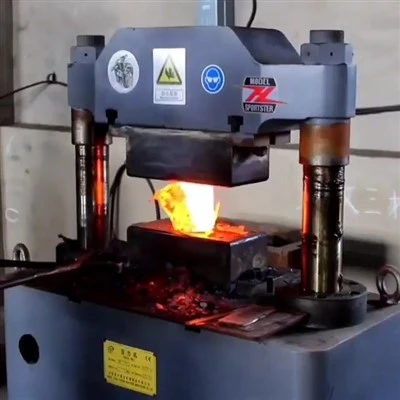
If you’re ready to talk about what kind of hydraulic forging press (or remote upgrade) fits your operation, reach out to discuss your needs. Whether you’re a small shop just starting out or a large manufacturer looking to expand, we’ve got the gear and the support to get you set up right.
Hydraulic Forging Press References
- Occupational Safety and Health Administration (OSHA). “Hydraulic Press Safety Guidelines.” U.S. Department of Labor, 2022.
- Hydraulic Forging Press Technology. Forging Industry Association, 2021.
- Retrofit Solutions for Industrial Press Equipment. Industrial Maintenance Magazine, 2023.
- Precision Control in Metal Forging. Journal of Manufacturing Processes, vol. 45, 2020, pp. 789-797.
Anyang Xinsheng Machine Tool Co., Ltd.
As one of the most professional hydraulic forging press manufacturers and suppliers in China, we have world-leading production equipment and strong manufacturing capabilities. Please feel free to buy high quality hydraulic forging press at competitive price from our factory.
Address: No.68 Renmin road, Anyang, Henan, China
E-mail: sales@xslathe.com
WebSite: https://www.xs-lathe.com/
