Hey everyone, if you’ve ever been to a construction site, a stone quarry, or even a big concrete precast plant, you’ve probably seen those massive block cutting machines churning out perfectly sized concrete or stone blocks like it’s no big deal. As someone who’s been supplying these bad boys for over a decade, I can tell you—those machines don’t just run on power alone. They’re packed with tiny, critical parts that keep everything smooth, precise, and safe. Today, I’m breaking down exactly what accessories make a block cutting machine tick, straight from the supplier’s side of things. No boring jargon, just real talk about the parts we sell every day and why they matter. Block Cutting Machine
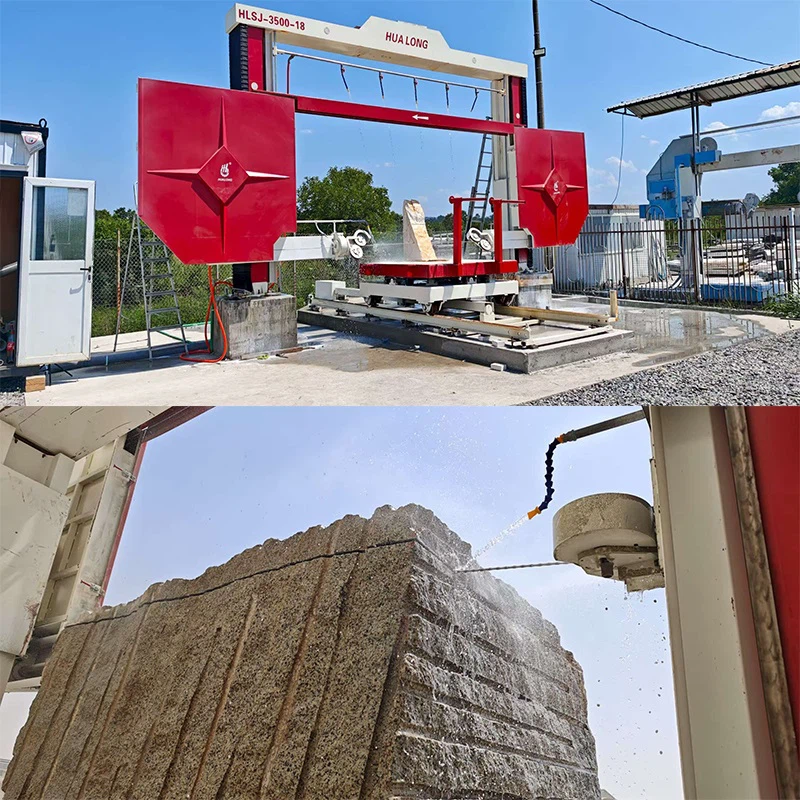
First off, let’s start with the most obvious but often underrated accessory: the cutting blade assembly. Wait, not just any blade—this is the heart of the whole operation. I’ve seen guys try to skimp here and regret it within a week. There are two main types, depending on what you’re cutting: diamond blades for stone, granite, marble, and even reinforced concrete, and carbide-tipped blades for softer stuff like regular concrete blocks or cinder blocks. The blade assembly isn’t just the disk, though—it’s the arbor, the blade guard, and the mounting bolts too. The arbor is that sturdy metal shaft that holds the blade in place, right? If it’s misaligned, your cuts will be crooked, and that’s a nightmare for anyone trying to build straight walls. The blade guard is non-negotiable for safety, especially when you’re dealing with 12-inch blades spinning at 3,000 RPM. We always tell new customers to double-check that their guard fits their blade size—too loose and it flops around, too tight and it scratches the blade.
Next up, something most first-time buyers don’t think about until their machine overheats: the cooling system accessories. When you’re cutting through dense material, that blade gets red-hot fast, and if it seizes up, you’re looking at a $1,500 blade replacement and a whole day of downtime. The main parts here are the water pump, the hose kit, the spray nozzles, and the coolant filter. The water pump isn’t just pushing water—it’s got to push enough to reach the blade’s edge, not just dribble on the side. We sell heavy-duty hose kits that are oil-resistant, because construction sites are messy and you don’t want a hose cracking after a week of being near diesel tanks. The spray nozzles are small, but if they get clogged with sediment, you’re back to overheating. We recommend keeping a pack of spare nozzles in your toolbox—super cheap, saves you a ton of frustration. And don’t forget the coolant filter! It catches all the stone dust and concrete particles before they go back into the pump, so your system lasts way longer than if you just use plain water.
Now, for the precision crew: the alignment and guide accessories. If your blocks are all slightly different sizes, your customer’s not gonna be happy—and that’s on you for not maintaining your machine right. The guide rail system is key here. Most block cutters use linear guide rails, and the accessories that go with them are the rail clamps, the adjustment knobs, and the guide rollers. The rail clamps keep the rail fixed in place—if they’re loose, the whole machine shifts mid-cut. The adjustment knobs let you tweak the cut width by millimeters, which is perfect if you’re switching between standard 8-inch blocks and custom 10-inch ones. We also sell anti-vibration pads that go under the guide rail—vibration is the enemy of precise cuts, especially when you’re using diamond blades. A lot of guys skip these, but after a few months, they notice their cuts are off, and it’s almost always because they didn’t use the pads.
Safety accessories—you can never have enough of these, and I always nag my customers about ’em. First, there’s the emergency stop (E-stop) button, which isn’t just a button—it’s part of a whole wiring kit, right? It’s a big red button that you can hit with your fist if something goes wrong, and it cuts power instantly. We sell E-stop kits that are weatherproof, because sites are dusty and sometimes get rained on. Then there’s the dust collection system. Cutting stone and concrete makes way too much silica dust, which is bad for your lungs and also clogs up the machine’s moving parts. The dust collection accessory includes a hose connection and a small vacuum adapter that fits right into the cutting guard. Even if you don’t have a huge industrial vacuum, a portable shop vac works with this, and it keeps the job site cleaner and your machine running longer. Oh, and don’t forget the protective gear accessories that pair with the machine—like blade-resistant gloves, safety goggles, and ear plugs. We throw in a pack of these with every machine we sell, because I’d rather you be safe than sorry.
Wait, what about the moving parts? The linear drive system accessories. That’s what moves the cutting head back and forth or up and down. The main parts here are the drive belts, the pulleys, and the lubrication kit. Drive belts get worn out from all the pulling and pushing, especially if you’re cutting heavy blocks. We sell heavy-duty rubber belts that last 2-3 times longer than the cheap ones that come with some machines. The pulleys need to be aligned too, otherwise the belt slips and you get uneven movement. And the lubrication kit—those little oil dispensers that drip oil onto the drive rails. I’ve seen guys use motor oil instead of the recommended lubricant, and that leads to rust and stuck moving parts. We supply specific lubricants for our machines, and it’s $20 a bottle, way cheaper than repairing a drive system that seized up because of wrong oil.
Another accessory I love to talk about is the custom jig kit. Wait, not every job is cutting straight blocks—sometimes you need to make a curved edge, or a notch for a window frame, or a custom size for a patio. A jig kit has adjustable templates that you bolt onto the guide rail, so you can cut those custom shapes without guessing. A lot of our regular customers buy these because they take on small custom jobs that their competitors can’t, and it’s all because of that little accessory. The jig kits are easy to install, no special tools needed, and they turn a standard block cutter into a versatile machine that can handle more work.
Let’s not forget the maintenance and tool kits. When you get a new block cutter, you don’t want to run to the hardware store every time you need a wrench or a spare bolt. The maintenance accessory kit includes all the basic tools: Allen wrenches, socket sets, spare mounting bolts for blades, extra hose clamps, and a cleaning brush for the blade guard. We put these together because over the years, we’ve learned what parts go missing first when a customer gets a machine. Also, the calibration tool kit—things like feeler gauges to check blade alignment, and a digital caliper to make sure your cut size is accurate. Calibrating your machine once a month keeps your cuts consistent, and those tools make it way easier than trying to eyeball it.
Wait, is there anything I’m missing? Oh, the remote control! A lot of newer block cutters come with optional wireless remotes, which are a game-changer. You don’t have to stand right next to the machine while it’s cutting—you can adjust settings, start and stop the blade, and move the cutting head from a safe distance, especially when you’re working with large blocks. The remotes have a range of like 50 feet, so you can move a block or adjust the feed while the machine is running. We sell these as an add-on, but every customer who buys one swears by it—way less tired workers, and fewer accidents because no one’s leaning over a spinning blade.
Let me be real for a second. I’ve been doing this for 12 years, and I’ve seen customers save thousands of dollars by investing in good accessories, and I’ve seen others lose money because they cut corners. A $50 cooling nozzle that gets clogged is way cheaper than a $1,000 blade that overheats and cracks. A $30 drive belt is cheaper than a $500 drive system repair. The accessories aren’t just extra parts—they’re what make your block cutting machine work for you, not against you.

If you’re in the market for a block cutting machine, or you already have one and you’re looking to upgrade parts, hit me up. I don’t do the hard sell—we just supply what works, and we’ll tell you if you don’t need a certain accessory, or if you’d be better off getting a different one. Our team’s worked with quarry operators, precast plants, and small construction companies, so we know exactly what parts you need for your specific job. Shoot us a message when you’re ready to chat specs, prices, or even maintenance tips—we’re here to help.
Stone Crushing Machine References:
- National Precast Concrete Association. (2022). Essential Components and Maintenance for Concrete Block Cutting Equipment. NPCA Technical Manual.
- Stone Quarry Association. (2021). Safety and Operational Accessories for Dimension Stone Cutting Machines. SQA Safety Guidelines.
- Occupational Safety and Health Administration. (2020). Silica Dust Control for Construction Machinery. OSHA Equipment and Safety Standards.
- Linear Motion Systems Association. (2023). Precision Guide Accessories for Industrial Cutting Equipment. LMSA Technical Report.
- Concrete Construction Magazine. (2022). Cost-Effective Upgrades for Block Cutting Machines. Concrete Construction Product Guide.
Fujian Province Hualong Machinery Co., Ltd.
Fujian Province Hualong Machinery Co., Ltd. is one of the most professional block cutting machine manufacturers and suppliers in China, featured by quality products and good price. Please rest assured to buy high-grade block cutting machine for sale here from our factory.
Address: Huangshi Industrial Zone, Putian City, Fujian Province, China
E-mail: jenkin@hualongm.com
WebSite: https://www.stonecuttingmachine.com/
