If you’re in manufacturing, you’ve probably heard folks throw around terms like 5 axis CNC machining and water jet cutting like they’re interchangeable. Spoiler: they’re not. As someone who’s been working with 5 axis CNC machines for over a decade—first as an operator, now running a small shop that partners with custom part makers every week—I’ve seen way too many people mix these up and end up with parts that don’t meet specs, or way higher bills than they need. Let’s break this down like we would at a shop floor break room, no jargon overload. 5 Axis CNC Machining
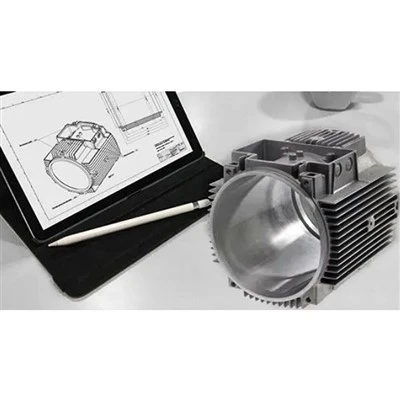
First, let’s start with the basics: what each process actually is, deep down, because that’s where the biggest differences live. 5 axis CNC machining uses computer-controlled cutters (think end mills, drills, ball mills) that move along five separate axes of motion—three standard linear axes (X, Y, Z) plus two rotational ones (A and B, or sometimes C, depending on the machine). That means the cutter can tilt, rotate, and swing around a part without you having to manually reposition it mid-job. It’s like if you could turn a desk lamp to shine light on the back of your desk without moving the lamp itself, or moving the whole desk out from under it. Water jet cutting? That’s exactly what it sounds like: a super high-pressure stream of water (sometimes mixed with abrasive particles like garnet for hard materials) that blasts through the part, cutting it like a tiny, precise sandblaster with a liquid nozzle. No heat, no physical tool wear (well, just a replaceable nozzle), just pressure doing the work.
Now, let’s talk about materials, because that’s a huge decision point. If you’re working with metal, plastic, composites, or even hard stone like granite or ceramic? 5 axis CNC is the way to go—no contest. Wait, but why? Let’s take a steel aerospace bracket as an example. Water jet can cut through it, sure, but the minute you need to machine a curved pocket on the side, or a angled flange that’s not flat? Water jet can only cut along a single flat plane unless you reposition the part, which adds time and risk of misalignment. 5 axis CNC doesn’t just cut flat shapes—it can create complex, multi-surface geometries: think turbine blades with twisted, aerodynamic curves, or medical implants like hip sockets that need a perfect fit from every angle. Even soft materials like foam or rubber? 5 axis CNC handles those too, though you’d pick a different cutter, obviously.
Water jet, on the other hand, has a few hard limits on materials. It’s great for soft stuff—foam, rubber, fabric, even thin wood or acrylic—but when you get to hard, dense materials like titanium, hardened steel, or thick carbon fiber? It works, but it’s slower. And wait, there’s a catch with abrasive water jet: when you add garnet to cut those hard materials, you leave behind a tiny layer of abrasive residue, which means you have to do extra post-processing to polish or clean the part. With 5 axis CNC, you can program the cutter to finish a surface exactly to spec on the same machine—no extra steps for most parts. That’s a big win for anyone needing tight tolerances, especially for aerospace or medical parts where even a 0.001-inch error is a fail.
Next up: precision and tolerances. This is where a lot of people get confused, so let’s be clear. Both processes are precise, but they shine in different ranges. 5 axis CNC machining can hit tolerances as tight as ±0.0005 inches—like, the thickness of a human hair, basically. For parts that need to fit together with zero play, like engine components or high-end tooling, that’s non-negotiable. I once had a client who made custom bike frames; they used to use water jet for the rough cut, then had to mill every joint because water jet’s tolerance is around ±0.005 inches. That’s a huge difference for a part that needs to align perfectly with the wheel and crankset. Water jet tops out around ±0.003 inches for most hard materials, and for softer materials, it can be even looser if you’re cutting thick layers. Why? The water stream can deflect a little as it cuts—especially if you’re cutting thin or bendable materials, the stream might wander slightly. The rigid cutter in 5 axis CNC? No deflection, because it’s a solid tool moving along a programmed path.
Then there’s heat-affected zone (HAZ), the part of the material that gets damaged from heat during cutting. This is make-or-break for a lot of materials, especially sensitive ones. Water jet is 100% cold cutting—no heat, no HAZ, ever. That means if you’re working with a material like polycarbonate that melts or warps easily, or a heat-sensitive alloy like Inconel that loses its strength when heated, water jet won’t mess with its molecular structure. But for most metal and hard composite jobs, 5 axis CNC’s HAZ is negligible, especially if you use a high-speed spindle and the right cutter. Wait, why? The cutter is moving so fast that it only contacts a tiny area of the material at a time, so it generates heat but most of it is pulled away by chips or coolant. For example, when we machine aluminum aircraft parts, the HAZ is less than 0.001 inches—way too small to affect performance. If you’re cutting something super heat-sensitive, like a thin film or a delicate PCB, you might pick water jet, but for 90% of engineering parts, 5 axis CNC’s minimal HAZ is nothing to worry about.
Cost is another big one, and it’s not as straightforward as “5 axis is more expensive” or “water jet is cheaper.” Let’s break it down by job size. For small, simple flat parts—like a 2-inch steel bracket with two holes, no angles or curves? Water jet will almost always be cheaper. The setup time is faster, there’s no programming for 5 axes, and the consumables (water and garnet) are cheap. But for complex parts—like a custom mold insert with 10 different angled surfaces, or a turbine blade with curved edges? 5 axis CNC is cheaper in the long run. Why? If you use water jet for that turbine blade, you’d have to cut the rough shape, then reposition the part 10 different times, each time risking misalignment and extra labor. Then you’d have to do all the finishing on a separate mill, adding more time and cost. With 5 axis CNC, you program the part once, load it in, and it does all the cuts, angles, and finishing in one run. That cuts labor time by 50% or more. Also, for high volume jobs? 5 axis CNC has faster cycle times for complex parts once the program is set up. Water jet’s cycle times get really long for hard materials because you have to blast through them with high pressure—our shop cut a titanium aerospace component last year: water jet took 3 hours to cut the rough shape, 5 axis CNC took 45 minutes to finish all the features. That’s a huge difference when you’re making 100 of those parts.
Wait, let’s not forget about part size and access. Water jet can cut huge parts—like a 10x10ft panel for shipbuilding, or a big stone countertop. Most 5 axis CNC machines have a work envelope of 4x4ft to 6x6ft, though we do have a few large-format ones that go up to 12x8ft. But even for big parts, if you need a complex internal feature or an angled cut on a large panel, 5 axis CNC can get to places water jet can’t. The water stream is a straight line, right? So if you need a 3D cavity that curves inward, water jet can’t reach it without repositioning the part, but 5 axis CNC can tilt the cutter to get into any spot on the part. I once worked on a big aircraft wing component that had 12 different angled ribs—we tried water jet first, but it couldn’t get the ribs’ curved shapes right without repositioning, so we switched to 5 axis and knocked it out in two runs, no repositioning. That’s a perfect example of when 5 axis is the only option.
Now, common myths I hear all the time. First: “Water jet is better for all heat-sensitive materials.” No—we’ve machined thin polycarbonate parts for medical devices, and the HAZ was so small it didn’t affect the part’s clarity or strength. We only use water jet for ultra-thin, flexible materials like fabric or thin film, where even a tiny bit of heat would warp them. Second: “5 axis is only for high-volume jobs.” That’s not true—we do a lot of low-volume custom parts, like 1-off prototype medical implants, where 5 axis is perfect because you can program the exact design, no tooling needed. Water jet still needs fixturing and setup, even for prototypes, so 5 axis is cheaper for small batches too. Third: “Water jet cuts any material.” Nope—try cutting a 6-inch block of hardened steel with water jet. It’ll take hours, wear out a ton of garnet, and leave a rough surface. 5 axis CNC can cut that same block in an hour with a carbide cutter, and leave a smooth finish.
So when should you pick which? Let’s recap: go with 5 axis CNC if you need complex 3D geometries, tight tolerances, multi-surface cuts, post-process efficiency, or parts made of metal, hard composites, or plastics. Go with water jet if you’re cutting soft, low-density materials, simple flat parts, or parts where zero HAZ is non-negotiable and you don’t mind extra post-processing.

At our shop, we work with a ton of clients who come to us thinking they need one or the other, and we help them pick the best process for their job, not the fanciest one. If you’ve got a project coming up—whether it’s a prototype, a run of 100 parts, or a big custom component—we can walk through what you need, the specs, and the best approach to keep your cost and timeline on track. Hit us up to chat through your project details, no pressure, no fine print.
Precision CNC Machining REFERENCES
ASTM International. (2022). Standard Guide for Computer Numerical Control (CNC) Machining of Engineering Materials. ASTM International.
Water Jet Technology Association. (2021). Abrasive Water Jet Cutting: Capabilities and Limitations for Industrial Applications. Water Jet Technology Association.
SME. (2020). Fundamentals of 5-Axis Machining for Aerospace and Medical Components. Society of Manufacturing Engineers.
Shenzhen Shunhaoda Technology Co., Ltd.
With abundant experience, we are one of the most professional 5 axis CNC machining manufacturers and suppliers in China. If you’re going to buy bulk high quality 5 axis CNC machining made in China, welcome to get free sample from our factory. Also, custom service is available.
Address: 902, Building A3, Tianrui Industrial Park, No. 35 Fuyuan 1st Road, Zhancheng Community, Fuhai Street, Bao’an District, Shenzhen
E-mail: sales@shdindustry.com
WebSite: https://www.shd-industry.com/
