Hey there! I’m a supplier of quenching furnaces, and today I’m gonna break down how polymer quenching works in a quenching furnace. It’s a pretty cool process, and I’m stoked to share it with you. Quenching Furnace
What is Polymer Quenching?
First off, let’s talk about what polymer quenching is. Quenching is a heat treatment process where you rapidly cool a material to change its properties. Usually, we use water, oil, or air for quenching. But polymer quenching uses a polymer solution instead.
Polymers are long – chain molecules. In a quenching solution, they form a sort of protective layer around the part being quenched. This layer can control the cooling rate, which is super important for getting the right properties in the material.
How the Quenching Furnace Sets the Stage
The quenching furnace is where the whole process starts. We heat the material to a specific temperature, depending on what it’s made of. For example, if it’s steel, we might heat it up to around 800 – 900 degrees Celsius.
The furnace needs to be well – controlled. We use thermocouples to monitor the temperature, and the heating elements are designed to distribute the heat evenly. That way, the whole part gets heated to the right temperature.
Once the material reaches the target temperature, we hold it there for a while. This is called soaking. Soaking allows the internal structure of the material to become uniform. It’s like letting a cake bake long enough so that it’s cooked all the way through.
The Role of the Polymer Solution
After the soaking period, it’s time to quench. We take the hot part out of the furnace and plunge it into the polymer solution. The polymer solution has a few key functions.
Cooling Rate Control
One of the main things the polymer does is control the cooling rate. When the hot part hits the solution, the polymers start to adhere to the surface. As the part cools, the polymer layer thickens. This layer acts as an insulator, slowing down the cooling rate.
Different polymers can give different cooling rates. We can adjust the concentration of the polymer in the solution to fine – tune the cooling. A higher concentration will generally slow down the cooling more than a lower concentration.
Preventing Cracks and Distortion
Rapid cooling can cause cracks and distortion in the material. The polymer layer helps to prevent this. By controlling the cooling rate, it reduces the stress that builds up in the material as it cools. This means we can get a part that has the right hardness and strength without all the unwanted cracks or warping.
Corrosion Protection
The polymer solution also provides some corrosion protection. Once the part is cooled and removed from the solution, the remaining polymer on the surface acts as a barrier against moisture and oxygen. This can extend the lifespan of the part, especially in environments where corrosion is a concern.
The Quenching Process Step – by – Step
Let’s go through the whole polymer quenching process step by step.
- Loading the Furnace: We start by loading the material into the quenching furnace. We make sure to arrange the parts in a way that allows for even heating.
- Heating: The furnace is turned on, and the temperature starts to rise. We keep an eye on the thermocouples to make sure the temperature is increasing at the right rate.
- Soaking: Once the target temperature is reached, we let the material soak for the required time. This ensures that the internal structure is fully transformed.
- Quenching: We quickly transfer the hot part from the furnace to the polymer solution. The part is usually agitated in the solution to ensure even cooling.
- Rinsing: After the part has cooled, we rinse it to remove the excess polymer. This is important for further processing or finishing.
- Tempering (Optional): Sometimes, we follow up the quenching with a tempering process. Tempering involves heating the part to a lower temperature for a certain period. This helps to relieve any remaining stress and improve the toughness of the material.
Benefits of Polymer Quenching in a Quenching Furnace
There are several benefits to using polymer quenching in a quenching furnace.
Cost – Effectiveness
Polymers are generally more cost – effective than some other quenching media, like oil. They also have a longer lifespan and can be reused multiple times. This means lower operating costs for you in the long run.
Environmental Friendliness
Compared to oil, polymer solutions are more environmentally friendly. They produce less smoke and fumes during the quenching process, which is better for the air quality in your workshop. Also, they are easier to dispose of properly.
Versatility
Polymer quenching can be used with a wide range of materials. Whether it’s steel, aluminum, or other alloys, we can adjust the polymer solution and the quenching process to get the desired properties.
Challenges and How to Overcome Them
Of course, there are some challenges with polymer quenching.
Polymer Degradation
Over time, the polymer in the solution can degrade. This can change the properties of the solution and affect the quenching process. To overcome this, we need to regularly monitor the solution and replace it when necessary.
Contamination
The solution can get contaminated with dirt, debris, or other impurities. This can also impact the quenching results. We can use filters to remove the contaminants and keep the solution clean.
Temperature Control
Maintaining the right temperature of the polymer solution is crucial. If the temperature is too high or too low, it can affect the cooling rate and the final properties of the material. We use temperature control systems to keep the solution at the optimal temperature.
Conclusion
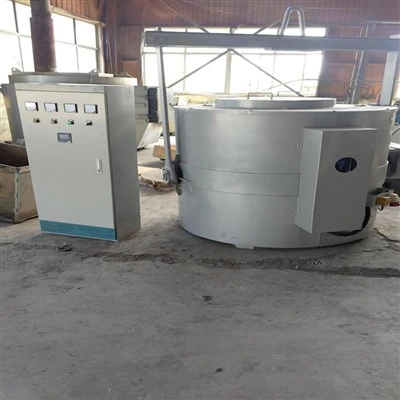
So, that’s how polymer quenching works in a quenching furnace. It’s a fascinating process that offers a lot of benefits in terms of cost, environmental impact, and versatility. If you’re in the market for a quenching furnace or interested in polymer quenching, I’d love to have a chat with you. We can discuss your specific needs and how our quenching furnaces can help you achieve the best results.
Car-Bottom Forging Furnace Don’t hesitate to reach out if you have any questions or if you’re ready to start a conversation about purchasing a quenching furnace. Let’s work together to take your heat – treatment processes to the next level.
References
- "Heat Treatment Principles and Techniques" by George E. Totten and D. Scott MacKenzie
- "Metallurgy for the Non – Metallurgist" by John R. Davis
Danyang Dingfeng Industrial Furnace Co., Ltd.
Danyang Dingfeng Industrial Furnace Co., Ltd. is one of the most experienced quenching furnace manufacturers and suppliers in China, also supports customized service with low price. Please feel free to wholesale high quality quenching furnace made in China here from our factory. For pricelist, contact us now.
Address: Lizhuang Economic Development Zone, Danyang City
E-mail: saleszk@dffurnace.com
WebSite: https://www.dffurnace.com/
