Hey everyone, Sarah here from your go-to 115mm angle grinder supplier—today I wanna talk about something that’s bugged almost every single grinder owner at some point: that annoying spinning problem. Not the “it’s working great” spinning, but the wobbly, off-kilter, almost shaking kind that makes you freeze mid-task like, “Wait, did I just break my $50 tool?” 115mm Angle Grinder
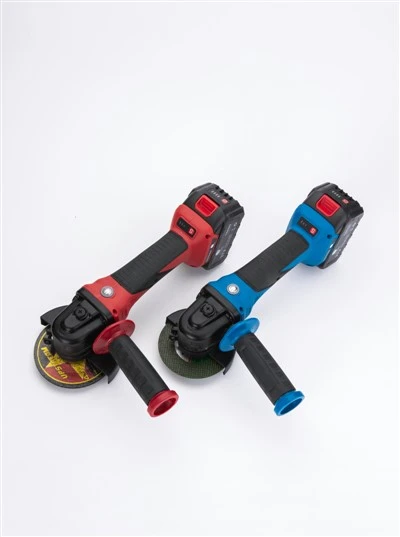
I’ve gotten so many DMs and emails about this lately, from weekend DIYers who tried to cut a few 2x4s for a shelf, to small construction guys whose grinder started acting sketchy halfway through a tile job. The good news? 9 times out of 10, this spinning issue isn’t a total death sentence for your 115mm angle grinder. It’s almost always a fixable problem with parts you can grab at your local hardware store, no need to buy a new grinder (or call a repair guy that’ll charge you more than the tool’s worth).
First off, let’s get one thing straight: when I say “spinning problem,” I’m not talking about the normal high-speed rotation. I’m talking about the disc that’s supposed to spin flat and steady wobbling like a drunk top, or the entire grinding head feeling like it’s twisting side to side when you turn it on. For 115mm models specifically, this is extra common because they’re smaller, lighter, and used for all those precise jobs (like cutting rebar, smoothing metal edges) that put more stress on the spindle and disc mounting parts.
Let’s break this down step by step, starting with the easiest, quickest fixes first—because who wants to take their grinder apart if they don’t have to?
- First Check: The Disc Itself (Surprised? Don’t Be)
I know, I know—you just swapped in a new disc last week, right? But hear me out. Even brand new discs can be messed up from the second they hit the shelf. Think about it: warehouses stacking them wrong, dropping a box, a shipping worker dropping one on the concrete. A bent disc is the #1 cause of that weird, wobbly spinning on 115mm grinders. And it’s so easy to check!
Here’s what I do when a customer sends me a pic of their wobbly grinder: grab the disc, hold it up to a straight edge (a metal ruler, a level, even the edge of your workbench works) and roll it slowly. If there’s a gap between the disc and the straight edge at any point? That’s a bent disc. Simple fix: take it off, toss it (don’t try to bend it straight—you’ll crack it mid-use, which is super dangerous), and slap on a new 115mm cutting or grinding disc. Pro tip from our team: always check the disc’s packaging for dents before you even take it out, and store them flat, not leaning against a wall. We see so many discs ruined by people leaning them in the garage corner.
Another disc-related thing? Over-tightening. I swear, half the guys I talk to cranked the disc nut on so tight they think it’ll fall off. No! When you over-tighten the nut, it warps the disc’s center hole (called the arbor hole, but don’t stress the fancy name) and makes the disc spin off-center. If you just swapped a disc and it’s been wobbly ever since, take that nut off, check the arbor hole for any scratches or burrs, clean it with a rag, and tighten the nut until it’s snug—then give it a quarter turn more. That’s it. Way less is way better here.
- Next: The Flange (That Tiny Part Everyone Ignores)
Okay, so you checked the disc, it’s straight, you tightened the nut just right—but it’s still spinning weird. Next up is the flange. Flanges are those two metal round pieces that sandwich the disc between them, right? There’s an inner flange that mounts to the spindle, and an outer flange that the nut screws into. For 115mm grinders, these are usually small, but they can get banged up, dirty, or even bent over time.
How to check this? Take the disc off, then look at the inner flange (the one that stays on the spindle). Spin it around and see if it’s flat—if there’s a dent, a scratch, or it looks like someone stepped on it, that’s your problem. Or, if it’s covered in built-up gunk—metal shavings, old grinding dust, even rust from being stored in a damp garage—those little particles make the flange not sit flat, so the disc tilts when you put it back on.
Fix here is easy: if there’s gunk, use a wire brush (or even a old toothbrush) to scrub both flanges clean, then wipe them down with acetone to get every tiny bit of dust off. If there’s a bend or a dent? Don’t try to hammer it straight—order a replacement flange for your 115mm grinder (we stock them, obviously) because a bent flange is a safety risk too, not just a spinning one.
Quick side note: make sure you’re using the right flange for your grinder. Some cheap off-brand flanges are slightly smaller or bigger than OEM, which leads to wobble. Stick to manufacturer parts, or parts made specifically for 115mm angle grinders—no generic flanges!
- The Spindle Lock: Is It Stuck or Damaged?
Okay, we’re moving a little deeper now, but still no fancy tools needed. The spindle lock is that little button you press to keep the spindle from spinning when you take the disc off, right? What a lot of people don’t know is that if the spindle lock gets stuck (or if it’s broken), it can cause the entire spindle to spin unevenly, leading to that obvious wobbly disc.
How to test this: with the grinder unplugged (super important—unplug it! Don’t skip that step), turn the grinder on and off a few times, then press the spindle lock. If it doesn’t click into place or feels gritty, that’s a problem. Most of the time, this is just dirt and dust building up inside the lock. Take a can of compressed air (even a hair dryer on cool works) and blow into the slot where the spindle lock sticks out. Then, spray a tiny bit of silicone lubricant (not WD-40—WD-40 is for freeing stuck parts, not lubricating moving tools long-term) into the slot, work the lock in and out a few times, and that’s usually it.
But if the lock is damaged—like if it broke off when you pressed it too hard, or if the spindle itself has bent threads from dropping the grinder—then you’ll need to replace the spindle lock assembly. Again, this is a common part for 115mm grinders, so it’s not hard to source. If you’re not comfortable taking the grinder apart fully, just reach out—we can walk you through it step by step.
- Last Resort (But Still Simple): The Bearings
Wait, bearings? That sounds scary, but for 115mm angle grinders, the bearings are the two small metal balls that let the spindle spin smoothly. Over time, grinding dust gets into the bearings, or the grease inside them wears out, which makes the spindle spin unevenly. This is less common than the disc or flange issues, but it’s the main “end of the road” fix for spinning problems if all the other checks are good.
How to tell if it’s bearings? Unplug the grinder, take the disc and flange off, then turn the spindle by hand. If it feels gritty, like there’s sand in there, or if it stops spinning abruptly instead of rolling smoothly for a second or two, that’s bad bearings. Fix here is replacing the bearings—again, super doable for anyone who’s held a screwdriver before. You just need to pop the end cap off the grinder, pull the old bearings out, tap new ones in with a small hammer and a piece of wood, and put it back together. Our team actually has a quick video on this for our 115mm models—hit us up and we’ll send it over, no extra charge.
Now, a quick safety note that I can’t skip, even though I’m being casual here: every single one of these steps, you MUST unplug the grinder first. I’ve heard horror stories of guys getting their hand caught mid-disassembly because they forgot to unplug. Also, when you’re testing the spindle or disc, wear safety glasses—small metal shavings fly, trust me.
Wait, let me also throw in a common mistake I see all the time: using the wrong disc size. A 115mm angle grinder is made for 115mm discs, obviously, but some people try to squeeze a 100mm or 125mm disc on there just because they have one lying around. Even if it fits on the nut, it’s gonna sit off-center and cause that spinning problem. Always match the disc size to your grinder’s specs.
Also, if you’re a rental user? Or if you borrow grinders a lot? Make sure you do a quick disc check before you use it. I had a guy come into our workshop last month who brought back a rental 115mm grinder that was wobbly—turns out the previous user had a bent disc and didn’t tell anyone, so he wasted an hour trying to fix his own project. A 10 second check saves so much time.
At the end of the day, most spinning problems on 115mm angle grinders are avoidable with a little bit of care. Don’t abuse your tools—store them flat, check your discs before use, don’t over-tighten nuts, and clean them after every job (I know, I know, cleaning sucks, but it saves you from so many headaches).
If you’ve tried all these steps and your grinder is still spinning? No sweat. We stock all the replacement parts you’ll need—flanges, spindle locks, bearings, discs—specifically for 115mm angle grinders, so you don’t have to hunt around for generic parts that don’t fit right. We also offer quick troubleshooting support, even if you just have a quick question about a part. If you’re looking to bulk buy 115mm grinders for your construction crew, or just need replacement parts for your personal tool collection, hit us up to chat about bulk pricing or get help finding the right parts.
Just to wrap this up, let’s recap the order of checks so you don’t waste time: 1) Disc (is it bent? Is the nut over-tightened?), 2) Flange (is it clean and flat?), 3) Spindle Lock (is it stuck or dirty?), 4) Bearings (gritty or uneven spin?). That’s it. No fancy tools, no crazy skills, just a little know-how to get your grinder back to working smooth.

Got more questions? Drop a comment below, or reach out to our team to connect about any of this, whether you’re a weekend DIYer or a pro needing bulk supplies. We’re here to help with all your 115mm angle grinder needs.
References
Cutting Machine Angle Grinder Maintenance Guide, Power Tool Institute, 2022.
115mm Angle Grinder Part Compatibility, DIY Power Tool Repair Blog, 2023.
OSHA Safety Guidelines for Angle Grinder Use, Occupational Safety and Health Administration, 2021.
Zhejiang Cheering Sewing Machine Co., Ltd.
With abundant experience, we are one of the most professional 115mm angle grinder manufacturers and suppliers in China. Please feel free to wholesale advanced 115mm angle grinder for sale here from our factory. We also accept customized orders.
Address: No.69 Heping Road, Lishui, Zhejiang, China
E-mail: gxjlq@126.com
WebSite: https://www.cheering-machinery.com/
