If you’ve ever tried moving a large crusher frame—think 10,000 to 50,000 pounds, with dimensions stretching 12 feet long, 8 feet wide, and 7 feet tall—you know it’s not just another equipment delivery. For our team at [your crusher frame supplier name], we’ve learned that rushing the transportation phase doesn’t just risk damage to the frame; it can delay a mine, quarry, or construction project by weeks. Too many of our past clients have told us they cut corners on transport planning, only to end up with cracked welds, bent side beams, or misaligned mounting holes that required costly repairs before installation. That’s why we’ve built our entire pre-delivery consultation around crusher frame transport, because getting this step right is non-negotiable. Crusher Frame

First, let’s talk about why a crusher frame is so uniquely tricky to move. Unlike a conveyor belt or a small crusher component, the frame is the rigid, structural backbone of the machine. It’s cast from heavy steel, with thick ribbing to withstand the force of rock impact, but that same thick steel makes it extremely heavy and prone to vibration damage during transit. Even a single sharp pothole or a sudden stop can create enough lateral shift within the trailer to stress-weld joints or warp the top beam. We once had a client who skipped our transport guidelines, opting for a standard flatbed trailer instead of a specialized low-loader, and their frame arrived with a 2-inch bend in the main horizontal beam—enough to throw the entire crusher’s alignment off, requiring a $15,000 field repair before they could even start installation. That’s a mistake we help clients avoid now, from the first quote.
The first critical step is pre-transport engineering review, and this is where we add value beyond just selling the frame. Every crusher frame we manufacture has unique load ratings, lifting points, and center of gravity (CoG) marked on its original engineering drawings. Too many transport companies work from generic heavy-equipment manuals, which don’t account for the specific rib placement or excess steel on your frame. For example, a primary crusher frame will have a thicker upper section to handle feed material, so its CoG is 1.5 feet higher than a secondary crusher frame of the same total weight. If a driver slings the frame from the wrong lifting point during loading, or positions the trailer to shift that CoG, the load can tip at highway speeds. Our team always shares the full engineering spec sheet with clients and their transport providers, and we even schedule a 30-minute virtual walkthrough before delivery to point out those CoG and lifting details.
Next, trailer selection is make-or-break. Standard flatbeds work for small steel parts, but a crusher frame needs a low-profile, heavy-duty trailer—specifically a double-drop low-loader, sometimes called a step-deck. Here’s why: the double-drop has two lowered sections, which let us load the frame at a height under 11 feet, the maximum legal height for most U.S. interstates without an oversize permit. A standard flatbed sits 3.5 feet higher, so a 7-foot-tall frame would clear 10.5 feet, which is just under, but the flatbed’s single support beam can’t distribute the crusher frame’s weight evenly across its length. Most 50,000-pound crusher frames need a trailer with a 60,000-pound minimum load capacity, with spreader rails that sit under the frame’s lifting points, not just its outer edges. We also advise against step-deck trailers with wood flooring—steel frames can scratch or dent wood flooring, but more importantly, wood doesn’t grip the frame’s mounting brackets as well as steel or aluminum floor plating.
Securing the frame is where we see the most avoidable damage. We’ve found that four simple straps aren’t enough—crusher frames need a combination of tie-downs and custom-blocked support to prevent movement. First, before loading, we place 2-inch thick rubber dunnage mats under the frame’s lower ribbing. These mats absorb vibration and prevent the steel from rubbing against the trailer’s metal, which can cause scratches that lead to corrosion over time. Then, instead of just strapping the top corners, we use heavy-duty chain binders rated for 1.5 times the frame’s total weight, attached to the trailer’s built-in winches, with tension adjusted to keep the frame from shifting more than 1 inch side-to-side or front-to-back. We also add four diagonal tie-downs on the upper edges of the frame—these counteract the forward and backward force of sudden stops or acceleration, which is where most frame bending happens. A client in West Virginia once used only four horizontal straps, and when their driver had to brake hard for a deer, the frame shifted 8 inches forward, cracking a weld on the lower jaw. Since we started recommending the diagonal tie-down setup, we’ve had zero similar issues.
Oversize permits are another step that’s easy to overlook, especially for clients new to heavy mining or quarry equipment. Most countries and states have strict limits on oversize loads: in the U.S., any load over 8.5 feet wide, 11 feet tall, or 48 feet long requires a special permit, and some routes have night-only travel restrictions or bridge weight limits that prohibit crossing. For a large crusher frame, you’ll need a permit for both the frame and any escort vehicles. We work with local transport permit specialists to pre-approve routes that avoid low bridges, narrow mountain roads, and weight-restricted areas—this saves clients from last-minute delays where a load is turned around at a weigh station. We’ve seen clients try to save $500 on permit fees, only to have their load rejected at the border, adding $2,000 in storage and re-routing costs. That’s why our transport support includes free permit route planning for every order over 30,000 pounds.
Loading and unloading also require specialized handling, and it’s not just about using a big crane. Crusher frames have fixed lifting lugs, but those lugs are only designed for vertical lift—side lift can pull the lugs off the frame, a mistake that happened to a client in Texas when their transport company used a side loader instead of a overhead crane. We always require that the loading team uses an overhead gantry crane or a mobile crane with a spreader bar that matches the distance between the frame’s lifting lugs. The spreader bar ensures even weight distribution, so no single lug is under more than 25% of the frame’s total weight. We also recommend that unloading happens at a jobsite with a level surface—even a 1-degree slope can cause the frame to shift as it’s lowered, putting stress on the lower ribs. If a jobsite has uneven ground, we supply adjustable steel blocks for the unloading area, free of charge, to keep the frame level during placement.
Finally, post-transport inspection is the last line of defense. When we deliver a frame, our quality control team stays on site for 30 minutes to do a quick walkthrough, checking for weld cracks, bent beams, or shifted components. We’ve seen small damage that transport drivers missed—like a scratch that turned into a rust spot, or a misaligned mounting hole that would have made installation impossible. In one case, a client’s driver didn’t notice a 1/8-inch shift in the frame’s side beam, and our team caught it before installation, adjusting the alignment with a hydraulic jack instead of making them tear down the entire crusher on site. This inspection doesn’t add cost—it’s part of the service we provide to every client, because we’re not just selling a frame; we’re making sure it works when it gets to you.
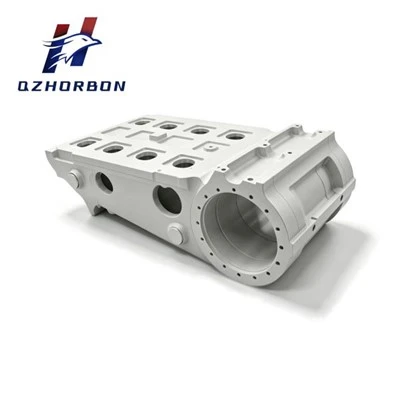
At the end of the day, transporting a large crusher frame isn’t just logistics—it’s a collaborative process between our team, your transport provider, and your on-site crew. Too many suppliers leave you to figure out transport on your own, but we see that step as just as important as the manufacturing. If you’re planning a crusher installation, or you’ve had a bad experience with a frame that arrived damaged, we’re here to walk you through every part of transport—from CoG planning to post-delivery checks. Reach out to our team to discuss your specific needs, and we’ll help you build a transport plan that keeps your frame safe, on time, and ready to install.
Crusher Pitman References
- Material Handling Industry of America (MHIA). "Standard Guidelines for Heavy Equipment Transport." 2021.
- American Society of Mechanical Engineers (ASME). "Structural Load Rating for Mining and Quarry Equipment Components." 2019.
- Federal Motor Carrier Safety Administration (FMCSA). "Oversized Load Permit Requirements for Heavy Equipment." 2022.
- International Organization for Standardization (ISO). "Crane Lifting Attachments and Load Distribution for Heavy Steel Structures." 2020.
Quzhou Horbon Mining Parts Co., Ltd.
Quzhou Horbon Mining Parts Co., Ltd. is one of the most professional crusher frame manufacturers and suppliers in China, featured by high quality customized service and OEM service. Please rest assured to buy premium crusher frame at competitive price from our factory. Contact us for pricelist.
Address: No.8 Nanshan Road, Qujiang District, Quzhou City, Zhejiang Province, China
E-mail: horbonmining@gmail.com
WebSite: https://www.horbonmachinery.com/
