Hey there, if you’ve ever wandered past a kids’ party and seen a group of little monsters bouncing, sliding, and squealing their way through a soft play zone, you’ve probably thought two things: “That looks like chaos” and “Wait, how much space do you actually need for this stuff?” As someone who’s been supplying space soft play setups for years—building, moving, troubleshooting, and even rescuing a lost sock mid-bounce—I can tell you it’s not just a random “fit it in whatever’s left” situation. There’s actual math, a little common sense, and way too many late nights spent adjusting foam blocks that I’ve learned along the way. Space Soft Play
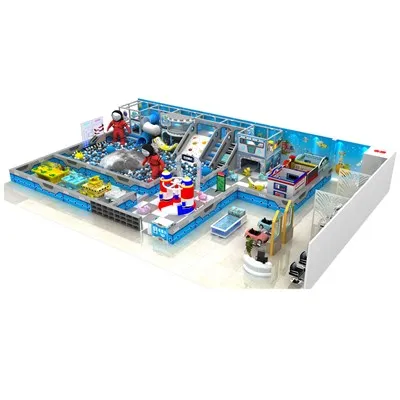
First off, let’s kill a myth right now: “minimum space” isn’t one-size-fits-all. You can’t cram a full-size 10-foot ball pit into a closet, and you can’t tell a 3-year-old’s mom she needs a 1,000 sq ft warehouse for a tiny weekend party. It depends on three big things: who’s using the space, what kind of soft play you’re setting up, and the non-negotiable rules that keep everyone safe. I’ll break this down like I’m chatting with a venue owner who just texted me asking if their 1,200 sq ft rec room works for a pop-up.
Let’s start with the crowd, because that’s the biggest variable. I’ve worked for everything from tiny café soft plays (think: only 10-15 kids at a time, ages 1-5) to big event spaces where 50+ kids flood in for a birthday bash. For the little ones—toddlers who can’t quite coordinate a run, who trip over their own feet constantly—you need way more room per kid than for older kids who know how to bounce without launching a friend across the foam. Toddlers need space to crawl, to slow down, to avoid getting squished when a random toy gets knocked over. For that age group, I usually calculate 25-35 sq ft per child. That might sound like a lot, but let’s do the math: 25 sq ft for a 10-person toddler group is 250 sq ft minimum. If you have a tight spot, you can push that to 20 sq ft, but only if you’re swapping a big ball pit for a smaller one and cutting out extra foam obstacles. I once tried to squeeze 15 toddlers into a 250 sq ft spot and got a call 20 minutes later from a panicking mom who said her kid’s shoe was stuck under a block. Don’t do that.
For kids ages 5-12, they’re a little more coordinated, so you can drop that to 15-20 sq ft per kid. They don’t crawl as much, they can navigate slides without hitting someone, and they’re better at staying out of each other’s way. A small group of 12 kids here would need 180-240 sq ft, which is way more flexible than the toddler zone. But here’s the catch: if you’re adding anything active—like a mini obstacle course with balance beams or a climbing wall—you need extra space for movement. That 15 sq ft per kid? That’s just for the play structures, not the walkways around them. More on that later.
Now, the actual play equipment is where people mess up the most. A lot of first-time buyers just look at a ball pit and think, “It’s a pit, so just the pit size.” Nope. Every single piece of soft play has a “footprint” plus a “safety zone” around it. That safety zone isn’t just decoration—it’s where a kid might fall, or climb out of a slide, or trip over a stray ball. For most standard soft play pieces, the safety zone is 2-3 feet on all sides. So if you have a 6-foot-long soft slide, it’s not just 6 feet long at the base—you need 6 feet plus 3 feet of clear space in front of it, so that’s 9 feet total. If you ignore that, a kid might launch off the end and hit a wall, or another kid running by. I learned this the hard way when I set up a slide at a daycare that only had 1 foot of space in front; a 4-year-old face-planted into a plastic bin of crayons. Not my finest moment.
Let’s go through common pieces and their minimum space needs, because that’s way easier than guessing. A standard toddler ball pit (the kind with soft walls, no super tall sides) is usually 8×8 feet. Add the safety zone, so total space required is 12×12 feet (that’s 144 sq ft) just for the pit. If you want a bigger pit, obviously it grows, but for a pop-up at a coffee shop, that 8×8 is perfect. Then there’s a soft play climb-and-slide combo—this is the most popular piece for both toddlers and young kids. A basic one is 10 feet wide by 8 feet deep. Add the safety zone, so you’re looking at 14×12 feet (168 sq ft) minimum. If you’re adding a small foam tunnel to that, you have to account for the tunnel’s length too—tunnels are usually 4-6 feet long, so you need to stretch the depth by that much. For a tunnel plus climb-slide, that jumps to around 20×12 feet (240 sq ft).
What about something bigger, like a mini obstacle course? I’m talking balance beam, soft cones, maybe a foam block to jump over. A basic obstacle course for 5 kids is about 15 feet long by 8 feet wide, plus a safety zone on the sides, so that’s 21×12 feet (252 sq ft) minimum. If you want to add a little ball pit at the end of the course, tack on another 8×8 feet, so total is even more. Here’s a pro tip: if you’re short on space, you don’t have to set up the whole course at once. We often take obstacle courses and swap out pieces for smaller ones—like a shorter balance beam instead of a full-length, or skipping the cones and using foam blocks as markers. It still works, and it saves you a few sq ft.
Wait, but what about non-play space? This is the part no one tells you about. You need room for parents or caregivers to stand, right? Most venues forget this, and then a dozen moms are crammed into the play zone trying to watch their kids, leading to chaos. For every 5 kids, you need about 20 sq ft for adults. If it’s a toddler zone with 10 kids, that’s 40 sq ft just for caregivers. Also, you need space for storage—extra foam blocks, first aid kits, spare ball pit balls, that random lost sock you’ll find later. If you have a small setup, you can store stuff in a corner, but if you’re doing a big event, you need at least 50 sq ft of extra space for storage. I once had a customer who thought their 1,000 sq ft space was enough, but when we showed up, half the space was taken by a food truck they forgot to mention. We had to swap a big ball pit for a smaller one just to fit, and the kid ended up missing their birthday ball pit. Ouch.
Let’s throw some real numbers at this so it’s not just jargon. Let’s say you’re a small business owner with a 1,000 sq ft space, and you want a mix of toddlers and older kids. What’s the minimum you can get away with? Let’s break it down:
- 10 toddler spot: 250 sq ft
- Climb-slide combo: 168 sq ft
- Caregiver space: 100 sq ft
- Storage: 50 sq ft
- Walkways (super important! You need space to move between pieces, not run into them): 200 sq ft
Wait, that adds up to 768 sq ft. So the remaining 232 sq ft can be a smaller ball pit, or extra foam blocks, or even a little area for a craft table. That works. If your space was 800 sq ft, you’d have to cut back—maybe make the climb-slide combo smaller, or have 8 toddlers instead of 10. If you only have 500 sq ft total? You’re limited to a tiny setup: a 6×6 ball pit, a small tunnel, and space for 5-6 toddlers. No climb-slide, no obstacle course. That’s totally doable for a weekend pop-up or a small café’s soft play nook.
But here’s the fine print: these are minimums, not recommendations. If you can go bigger, you should. Why? Kids run, they get excited, they’ll pile into a corner if you give them space. I set up a soft play at a library once that was exactly at the minimum we calculated, and within an hour, a group of 7-year-olds had turned the walkway into a race track. They crashed into a foam block, and we had to rearrange the whole thing. If we’d had 100 extra sq ft, that race could have happened without crashing. Also, safety standards—some local fire codes require a certain amount of open space per person, so you can’t ignore that. I always check the local fire code before I confirm a setup, because some places have strict rules about how many people can be in a space at once.
Another thing: ceiling height. I almost forgot this! Soft play isn’t just floor space—you need room above too. Most soft play pieces are 2-4 feet tall, so your ceiling needs to be at least 8 feet high minimum. If your ceiling is 7 feet, you can only go with super low pieces—like floor-only foam blocks, no climbing structures. If the ceiling is 10 feet, you can do a mini climbing wall, a slightly higher slide, even a small soft treehouse. I once tried to set up a slide in a space with 7-foot ceilings and the top of the slide hit the ceiling. Had to saw a little off the slide (not ideal) and ended up with a much shorter slide. Don’t let that happen to you.
Wait, what about outdoor soft play? A lot of people ask about that, since it’s popular for backyard parties or festival pop-ups. The minimum space for outdoor is actually almost the same as indoor, but you have to account for weather—you need a little extra space around the setup for a tarp or a shade structure. Also, outdoor soft play usually has bigger pieces because it’s for more kids, so you might need 10-15% extra space for that. I did a backyard soft play for a 5-year-old’s birthday a couple years ago—they had a 1,500 sq ft backyard, which was perfect for a full obstacle course, a big ball pit, and room for 20 kids. If their backyard was only 1,000 sq ft, we’d have had to skip the obstacle course and go for a smaller pit.
Now, let’s talk about the mistakes I see people make all the time, because I’ve made almost all of them. First, forgetting walkways. I can’t stress this enough—if your play pieces are all squished together, kids can’t move, which leads to squabbles, falls, and lost toys. I once had a customer who set up a ball pit right next to a slide, with only 6 inches of space between them. A kid tried to climb over the gap, fell, and scraped their knee. It was totally preventable if we’d had a 2-foot walkway. Second, not accounting for growth. If you’re a venue owner planning to add a few more pieces in 6 months, leave extra space now. Don’t set up a 5-piece setup that has no room for a tunnel later. Third, cutting corners on safety zones. That 2-foot zone isn’t just “extra space”—it’s where a kid might trip, so you don’t want a hard wall or a bin of toys there.
So, to wrap this up, what’s the actual minimum? It’s not a number you can Google and plug in. It’s a mix of the age of the kids, the pieces you want, your ceiling height, and the safety rules. For a tiny pop-up for 5 toddlers, you can get away with 300-400 sq ft. For a basic setup with a climb-slide and a ball pit for 10 kids, 700-800 sq ft. For a big event with 20+ kids, 1,500 sq ft minimum. But if you ask me, the best minimum is whatever leaves a little extra wiggle room. Because when a kid’s favorite part of the soft play is turning a foam block into a rocket ship, you don’t want them to feel cramped.

If you’re planning a soft play setup and you’re not sure if your space works, don’t guess—send me the details: how much space you have, the ages of the kids, what kind of pieces you want, and I’ll walk you through exactly what will fit, what to skip, and how to stay safe. I’ve been doing this long enough to know that there’s no such thing as a “too small” space, just a “bad setup” for that space. Let’s chat, and we can build something that works for you and the little ones who’ll be bouncing around.
Indoor Playground References:
- National Safety Council. (2022). Playground Safety Guidelines for Indoor Soft Play Structures.
- International Association of Amusement Parks and Attractions (IAAPA). (2021). Soft Play Space and Layout Standards.
- U.S. Consumer Product Safety Commission (CPSC). (2020). Recommendations for Children’s Indoor Play Areas.
- Early Childhood Education Journal. (2019). Optimal Space Allocation for Toddler Soft Play Environments.
Guangzhou Flyfun Amusement Equipment Co., Ltd.
Guangzhou Flyfun Amusement Equipment Co., Ltd. is one of the most professional space soft play manufacturers and suppliers in China, featured by quality products and good price. Please rest assured to buy cheap space soft play made in China here from our factory. Customized orders are welcome.
Address: No.26 Dangang West Street,Shiji Village,Shilian Road, Shiji Town, Panyu District, Guangzhou City,Guangdong,China.
E-mail: 13416106505@163.com
WebSite: https://www.indoorsoftplayground.com/
