If you’ve ever worked in industries that rely on mobile surveillance—think construction sites, event production teams, temporary retail pop-ups, or emergency response teams—you know how critical it is to keep your gear protected, portable, and organized. As a mobile surveillance enclosures supplier, I get asked this question at least a dozen times a week: “Are these things actually stackable for storage?” It’s a valid question, too. For anyone dealing with limited warehouse space, tight vehicle bays, or frequent cross-site moves, stacking your enclosures isn’t just a convenience—it can save you thousands in logistics costs, prevent gear damage, and cut down on prep time for job sites. But the answer isn’t a simple yes or no. It depends on how they’re built, what they’re designed to hold, and how you use them. Let me break this down the way I explain it to our customers, straight from the warehouse floor and the field. Mobile Surveillance Enclosures
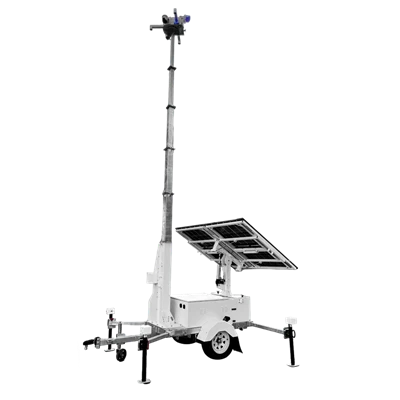
First, let’s get one thing straight: not all mobile surveillance enclosures are created equal. The ones our team engineers, for example, aren’t just plastic boxes—they’re purpose-built to house heavy DVR systems, battery banks, solar panels, and weatherproof cameras that can weigh anywhere from 150 to 400 pounds depending on the size and configuration. So stacking them isn’t just a matter of locking lids together; it’s a matter of structural integrity. A lot of cheaper, off-brand enclosures you’ll find online are made with thin, corrugated plastic or flimsy metal frames that twist under even light weight. We tested one of those once, back when we were still vetting parts suppliers, and dropped a 50-pound test weight on a single unit that was rated for stacking. The corner cracked, the lid bent, and a hidden wiring compartment split open—all because the frame didn’t have reinforced welds or load-bearing supports. That’s the kind of failure that happens when you assume all enclosures are the same.
Now, for the enclosures that are actually designed for stacking: what makes them work? It comes down to two core design features: load rating and interlocking systems. Our stackable line, for example, is tested to hold up to 1,200 pounds of total weight when stacked three units high. That means the bottom unit isn’t just holding its own weight—it’s supporting two more full enclosures on top of it. How do we make that possible? We use 12-gauge galvanized steel frames with ribbed internal reinforcements along the sides and bottom, and reinforced corner posts that distribute weight evenly across the entire unit, not just the bottom lip. A lot of suppliers cut corners here by using thin corner brackets, but we’ve had our engineering team run load tests in our warehouse for years—we stack four units (well over 1,600 pounds total) just to test durability before sending a new design to production, because we’ve had customers tell us stories of bottom enclosures collapsing in their warehouse aisles, taking out cameras and battery systems in the process.
Then there’s the interlocking system, which is just as important as the structural frame. If you have two stacked units that shift an inch to the side, that’s not just a nuisance—it’s a safety hazard. A 200-pound enclosure falling from 6 feet up can seriously injure someone, or destroy $2,000 worth of surveillance gear. Our interlocking system uses two things: male and female corner guides that line up when you set a unit down, and locking latches on the sides that you can tighten with a simple socket wrench to keep the stack secure. We also added anti-slip pads to the bottom of every unit, which prevent shifting even if you’re storing them on concrete or uneven warehouse floors. We designed that feature after a customer in Ohio called us in a panic last winter—they’d stacked four units in their outdoor storage lot, and a ice storm had the concrete under them turning slightly soft. The top unit had shifted 6 inches to the side, and they only noticed when it fell and crushed a nearby pallets of event cables. That’s the kind of real-world problem that makes us double down on stackability features, not just for convenience, but for safety.
But here’s the catch that most suppliers won’t tell you: stacking isn’t one-size-fits-all. There are a lot of scenarios where stackable enclosures work great, and a few where they don’t. Let’s start with the scenarios where stacking is a game-changer. If you’re a construction company that stores 20 surveillance enclosures on a site trailer between jobs, stacking them cuts the storage footprint by 60%—meaning you can fit more units on the same trailer, so you don’t have to rent a second hauling truck for every job. For event production teams that set up 10 to 15 surveillance cameras for festivals or sports games, stacking enclosures in the off-season means you don’t have to rent extra warehouse space to store them. Even emergency response teams, who might deploy 5 enclosures during a disaster, can stack them in the back of an ATV or utility truck for transport, instead of tying them down individually and wasting valuable cargo space. I’ve seen a customer in Florida use our stackable enclosures during hurricane season—they store 12 units in a single 4×4 foot space in their garage, and when a storm hits, they load them into a pickup truck and deploy them to shelter sites in under an hour. That’s the kind of efficiency that stackability delivers.
Now, when stacking isn’t the right choice. First, if you’re storing enclosures long-term outdoors, especially in areas with extreme temperature swings or heavy snow load. Even the most reinforced stackable enclosures can have their seals compromised over time if they’re stacked high for months on end. The bottom unit is under constant pressure, which can warp the weatherproof lid and allow water to seep in, damaging the internal electronics. We always advise customers to store no more than two units high outdoors long-term, and to use additional weatherproof covers on the bottom unit just to be safe. Another scenario: if your enclosures have large, protruding accessories mounted on the outside—like external solar panels, antenna mounts, or camera arms. If you have a unit with a 3-foot solar panel sticking out the side, stacking another unit on top won’t work, because the panel will hit the lid of the lower unit. In that case, you might need to invest in accessories that mount internally, or opt for smaller, flat-faced enclosures that can be stacked. And finally, if you’re moving enclosures frequently, especially over rough terrain, you might want to avoid stacking more than two units high. The constant jostling can loosen wiring connections inside the enclosures, or even damage the mounting brackets for the cameras. We had a customer in Texas who tried stacking four enclosures on a flatbed trailer for a cross-state move—when they unloaded them, two of the cameras inside the bottom unit were knocked loose from their mounts, costing them over $1,500 in repairs. That’s a mistake we always warn customers about.
As a supplier, we also get a lot of questions about cost and portability when it comes to stackable enclosures. A lot of customers assume that stackable units have to be heavier or more expensive, but that’s not the case. Our stackable enclosures are actually 10% lighter than our non-stackable line, because we designed the frame to distribute weight evenly, so we don’t need extra heavy metal for support. The interlocking system is also a add-on that costs about $50 per unit, which is a tiny investment compared to the savings you get on storage and logistics. We also make sure that our stackable enclosures are still easy to transport individually—each one has heavy-duty handles on the sides, and we sell optional wheel kits that let you roll a single unit around a job site or warehouse without lifting it. That balance between stackability and portability is something we spent three years perfecting, because we know that no one wants to sacrifice ease of use for storage efficiency.
I also want to talk about common mistakes that customers make when stacking their enclosures, because even the best design won’t prevent damage if you’re stacking them wrong. First, always make sure the weight of the upper units is evenly distributed. Don’t stack a unit that’s full of heavy batteries dead-center on a lower unit that has most of its space taken up by smaller components—if the weight is off-center, it will put stress on one side of the lower unit and cause it to warp. Second, never stack units that have dents or cracks in their frame or corners. A small dent in the corner might not seem like a big deal, but it can throw off the alignment of the interlocking system, leading to shifting and possible collapse. We always tell customers to inspect each unit before stacking it, and if they find any damage, either repair it or use that unit for ground-level storage only. Third, don’t exceed the manufacturer’s load rating. We print the load limit right on the side of every stackable enclosure we make, and we mean it. A lot of customers think “it looks sturdy enough to hold more,” but testing has shown that even a 100-pound overage can put extra stress on the corner posts and reduce the lifespan of the unit by years.
Looking ahead, I think stackable mobile surveillance enclosures are going to become even more important as the industry grows. More construction sites are using temporary surveillance to reduce theft and vandalism, event production is expanding to larger outdoor spaces, and emergency response teams are relying on mobile surveillance more than ever. The demand for gear that’s flexible, space-efficient, and durable is only going up. As a supplier, we’re constantly tweaking our designs to make stacking even easier—we’re working on a new interlocking system that doesn’t require any tools to secure, so customers can stack and unstack units in seconds, even with gloves on. We’re also testing a line of lightweight, stackable enclosures for temporary use, targeted at small construction teams and hobbyist event producers who don’t need heavy-duty gear for long-term deployments.
At the end of the day, the question of whether mobile surveillance enclosures are stackable comes down to choosing the right product for your needs. If you’re looking for gear that will make storage and transport easier, and you’re willing to follow the basic guidelines for stacking weight, alignment, and safety, then yes, stackable enclosures are absolutely worth the investment. If you need gear for long-term outdoor storage, or if you have large protruding accessories that make stacking impossible, then there are still great non-stackable options that will work for you. But one thing I can promise you, as someone who’s been selling and servicing mobile surveillance enclosures for over a decade: the right stackable enclosure will save you time, money, and stress, and it will protect your valuable gear from damage during storage and transport.

If you’re ready to learn more about our stackable line, or if you have questions about whether stacking is the right choice for your specific needs, our team is here to help. We can walk you through load test results, show you real-world examples of how our enclosures have worked for other customers, and help you design a setup that fits your job requirements and storage space. Don’t hesitate to reach out to our team to discuss your needs and get a customized quote.
Solar Mobile Surveillance Tower References
- International Organization for Standardization (ISO) 14801, Earth-moving machinery – Operator enclosures – Laboratory tests and performance requirements, 2017.
- National Association of Home Builders (NAHB), Temporary Construction Site Security Best Practices, 2022.
- Occupational Safety and Health Administration (OSHA), Powered Industrial Trucks – Load Handling and Storage Guidelines, 2021.
- Event Security Association (ESA), Temporary Surveillance Gear Storage and Transport Standards, 2023.
- Mobile Technology Association, Portable Enclosure Durability and Load Testing Report, 2020.
Shenzhen Gago Electronics Co., Ltd.
Shenzhen Gago Electronics Co., Ltd. is one of the most professional mobile surveillance enclosures manufacturers and suppliers in China. As we have world-leading production equipment and strong manufacturing capabilities, we warmly welcome you to buy high quality mobile surveillance enclosures at competitive price from our factory.
Address: C201,Building B, No.170 Xingfa Road,Shangcun Community, Gongming Street, Guangming District, Shenzhen, China
E-mail: info@gagoelectronics.com
WebSite: https://www.gagodeterrence.com/
