Hey there! I’m a supplier of EPS Pre-expanders, and I often get asked, "What kind of raw materials can an EPS Pre – expander process?" Well, let me break it down for you. EPS Pre-expander
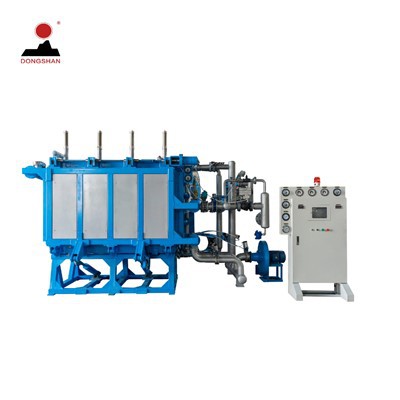
First off, let’s talk about what an EPS Pre – expander does. EPS stands for Expanded Polystyrene, and a pre – expander is a machine that starts the process of turning raw polystyrene beads into the lightweight, foam – like material we all know. It heats the beads with steam, causing them to expand.
Polystyrene Beads
The most obvious raw material for an EPS Pre – expander is polystyrene beads. These beads are made from styrene monomers that have been polymerized. They come in different sizes and densities, and the choice depends on the final product you want to make.
For example, if you’re making packaging materials, you might use larger beads with a lower density. These expanded beads can provide good cushioning while using less material. On the other hand, if you’re making insulation boards, smaller beads with a higher density could be a better choice. They can create a more compact and efficient insulation layer.
There are different grades of polystyrene beads too. General – purpose beads are the most commonly used. They’re versatile and can be used for a wide range of applications. These beads are relatively easy to process in an EPS Pre – expander, and they expand evenly.
Blowing Agents
Blowing agents are another crucial raw material. They’re what makes the polystyrene beads expand. The most common blowing agent used in EPS production is pentane. Pentane is a hydrocarbon that boils at a relatively low temperature. When the EPS Pre – expander heats the polystyrene beads with steam, the pentane inside the beads turns into a gas. This gas then creates pressure inside the beads, causing them to expand.
There are different types of pentane, such as n – pentane and iso – pentane. The ratio of these two types can be adjusted depending on the desired expansion properties. For instance, n – pentane has a higher boiling point and can provide more controlled expansion, while iso – pentane can lead to faster expansion.
Some manufacturers are also exploring alternative blowing agents due to environmental concerns. For example, carbon dioxide can be used as a blowing agent. It’s a more environmentally friendly option, but it requires some modifications to the EPS Pre – expander process.
Flame Retardants
In many applications, especially in construction and packaging, flame retardants are added to the polystyrene beads. Flame retardants help to reduce the flammability of the expanded polystyrene. This is important because EPS is a combustible material, and adding flame retardants can make it safer to use in various settings.
There are different types of flame retardants available. One common type is brominated flame retardants. They work by releasing bromine radicals when exposed to fire. These radicals react with the free radicals in the combustion process, effectively suppressing the fire.
However, there are also some concerns about the environmental and health impacts of brominated flame retardants. As a result, there’s a growing trend towards using more environmentally friendly alternatives, such as phosphorus – based flame retardants.
Colorants
If you want to produce colored EPS products, colorants are added to the raw materials. Colorants can be in the form of masterbatches, which are concentrated mixtures of pigments and a carrier resin. When added to the polystyrene beads in the right proportion, they can give the final EPS product a specific color.
Colorants are used for both aesthetic and functional purposes. For example, in the construction industry, colored EPS insulation boards can be used to differentiate different types of insulation or to match the building’s design. In the packaging industry, colored EPS can make the product more attractive to consumers.
Additives
There are also various additives that can be added to the raw materials processed by an EPS Pre – expander. These additives can improve the performance of the final EPS product in different ways.
One type of additive is anti – static agents. EPS has a tendency to generate static electricity, which can cause problems in some applications, such as attracting dust. Anti – static agents can help to reduce the static charge on the EPS surface.
Another type of additive is UV stabilizers. If the EPS product is going to be exposed to sunlight, UV stabilizers can prevent the degradation of the material caused by ultraviolet radiation. This can extend the lifespan of the product, especially in outdoor applications.
Impact of Raw Materials on EPS Pre – expander Performance
The choice of raw materials can have a significant impact on the performance of the EPS Pre – expander. For example, if the polystyrene beads are of poor quality, they may not expand evenly. This can lead to inconsistent product quality, with some areas of the expanded EPS being denser than others.
The type and amount of blowing agent also matter. If too much blowing agent is used, the beads may expand too rapidly and burst, resulting in a loss of material and a lower – quality product. On the other hand, if too little blowing agent is used, the beads may not expand enough, and the final product may not have the desired lightweight and insulating properties.
The addition of flame retardants, colorants, and additives can also affect the processing parameters of the EPS Pre – expander. For instance, some flame retardants may increase the viscosity of the molten polystyrene, which can require adjustments to the steam pressure and temperature in the pre – expander.
Our Advantage as a Supplier
As a supplier of EPS Pre – expanders, we understand the importance of raw materials in the EPS production process. We work closely with our customers to help them choose the right raw materials for their specific applications.
We also offer a high – quality EPS Pre – expander that can handle a wide range of raw materials. Our machine is designed to provide precise control over the expansion process, ensuring that the final EPS product meets the highest quality standards. Whether you’re using traditional polystyrene beads with pentane blowing agent or exploring more environmentally friendly alternatives, our EPS Pre – expander can do the job.
Conclusion
In conclusion, an EPS Pre – expander can process a variety of raw materials, including polystyrene beads, blowing agents, flame retardants, colorants, and additives. Each of these raw materials plays a crucial role in determining the properties and quality of the final expanded polystyrene product.
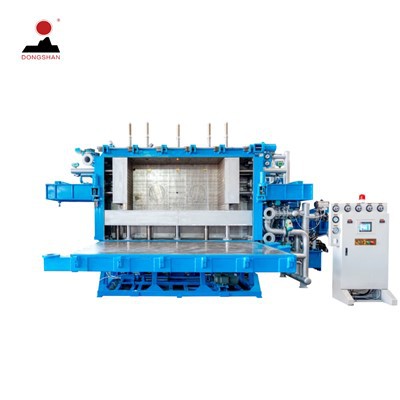
If you’re in the business of producing EPS products and are looking for a reliable EPS Pre – expander and guidance on raw materials, we’re here to help. Contact us to start a conversation about how we can meet your specific needs and take your EPS production to the next level.
EPS Cutting Machine References
- Modern Plastics Handbook
- Encyclopedia of Polymer Science and Technology
Hangzhou Fuyang Dongshan Plastic Machinery Co., Ltd.
Hangzhou Fuyang Dongshan Plastic Machinery Co., Ltd. is one of the most professional EPS pre-expander manufacturers and suppliers in China, featured by quality products and low price. Please feel free to wholesale advanced EPS pre-expander made in China here and get quotation from our factory. Customized orders are welcome.
Address: 101 Guanting, Baiqian Villige, Luzhu Town, Fuyang District, Hangzhou City, Zhejiang Province, China
E-mail: xu@dong-shan.cn
WebSite: https://www.epseppmachinery.com/
