The hijab, a symbol of modesty, faith, and cultural identity, comes in a rich variety of styles across different regions of the world. As a hijab supplier, I’ve had the privilege of witnessing and understanding the diverse traditional hijab styles that are not only deeply rooted in local cultures but also reflect the unique aesthetics and values of each community. Hijab
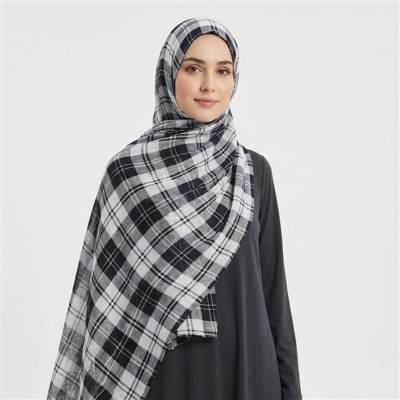
Middle East
In the Middle East, the hijab styles are as diverse as the region’s landscapes. One of the most iconic styles is the Shayla. This long, rectangular scarf is often made of lightweight fabric, such as silk or chiffon. It is typically draped over the head and shoulders, with one end left to hang freely down the back. The Shayla can be worn in various ways, from a simple, loose drape to a more elaborate, folded style. It is often accessorized with brooches or pins to add a touch of elegance.
Another popular style in the Middle East is the Khimar. This is a long, full-length veil that covers the head, neck, and shoulders, leaving only the face exposed. The Khimar is usually made of a thicker fabric, such as cotton or wool, and is often worn in more conservative communities. It provides a greater degree of modesty and is a symbol of religious devotion.
The Niqab is also a well – known hijab style in the Middle East, particularly in Saudi Arabia and some parts of the Gulf region. It is a face veil that covers the entire face except for the eyes. The Niqab is often paired with an Abaya, a long, flowing robe, and is a symbol of extreme modesty. While it is a controversial style in some Western countries, it holds deep religious and cultural significance in the Middle East.
South Asia
In South Asia, the hijab styles are influenced by the region’s rich textile heritage and cultural traditions. The Dupatta is a common hijab style in countries like India, Pakistan, and Bangladesh. It is a long, rectangular scarf that can be worn in multiple ways. It can be draped over the head and shoulders, with one end tucked into the front of the outfit, or it can be wrapped around the neck and then over the head. The Dupatta is often made of colorful, printed fabrics, such as silk or cotton, and is a popular choice for both everyday wear and special occasions.
The Chador is another traditional hijab style in South Asia, especially in Iran. It is a large, rectangular piece of fabric that is draped over the head and body, covering the entire body except for the face. The Chador is usually made of a simple, plain fabric, such as wool or cotton, and is a symbol of modesty and religious observance.
North Africa
North Africa has its own unique hijab styles. The Tichel is a traditional hijab style in countries like Morocco, Algeria, and Tunisia. It is a long, triangular scarf that is wrapped around the head in a series of folds. The Tichel can be worn in different ways, depending on the occasion and personal preference. It is often made of a lightweight, breathable fabric, such as cotton or linen, and is a practical and stylish choice for the hot North African climate.
The Haik is another hijab style in North Africa. It is a large, rectangular piece of fabric that is draped over the head and body, similar to the Chador. The Haik is usually made of a thick, heavy fabric, such as wool, and is often worn in more rural areas. It provides protection from the sun and wind and is a symbol of local culture and tradition.
Southeast Asia
In Southeast Asia, the hijab styles are a blend of local cultures and Islamic influences. The Tudung is a popular hijab style in Malaysia, Brunei, and Singapore. It is a square or rectangular scarf that is folded into a triangle and then wrapped around the head. The Tudung can be worn in different styles, from a simple, tight wrap to a more loose and flowing style. It is often made of a lightweight, colorful fabric, such as cotton or chiffon, and is a common sight in everyday life.
The Jilbab is also a well – known hijab style in Southeast Asia. It is a long, loose – fitting robe that covers the entire body, including the head. The Jilbab is usually made of a soft, comfortable fabric, such as cotton or polyester, and is a popular choice for both formal and informal occasions.
As a hijab supplier, I understand the importance of providing a wide range of hijab styles to meet the diverse needs and preferences of our customers. We source our hijabs from different regions of the world, ensuring that we offer authentic and high – quality products. Whether you are looking for a traditional Shayla from the Middle East, a colorful Dupatta from South Asia, or a stylish Tudung from Southeast Asia, we have something for everyone.
If you are interested in purchasing hijabs for your store or personal use, we would love to have a conversation with you. Our team of experts can provide you with detailed information about our products, including the different styles, fabrics, and colors available. We can also offer advice on how to choose the right hijab for your needs and preferences.
We believe that hijabs are not just pieces of fabric; they are a form of self – expression and a way to connect with one’s culture and faith. By offering a diverse range of hijab styles, we hope to empower women to express their individuality while maintaining their modesty.

Contact us today to start the conversation about your hijab procurement needs. We look forward to working with you to find the perfect hijabs for your collection.
Hijab References
- "The Hijab: History, Culture, and Contemporary Issues" by Leila Ahmed
- "Islamic Fashion: Globalization and the Politics of Representation" by Asma Barlas
- "Dress and Morality in Islam" by Muhammad al – Ghazali
Yiwu Wennuan Clothing Co., Ltd.
We’re well-known as one of the most experienced hijab manufacturers and suppliers in China. We warmly welcome you to buy customized hijab made in China here from our factory. If you have any enquiry about cooperation, please feel free to email us.
Address: 2nd Floor, Building B, No.17 Jinhui Road, Heyetang Industrial Zone, Futian Street, Jinhua, Zhejiang, China
E-mail: wennuan@wennuanfactory.com
WebSite: https://www.wennuanhijab.com/
